Showing posts with label dvt awareness month. Show all posts

Sunday, March 1, 2026

March is Blood Clot Awareness Month


Blood clots affect up to 900,000 Americans each year — and of that number, up to 100,000 lives are lost. Despite their prevalence, blood clots are frequently missed or diagnosed too late, in part because symptoms can be subtle, unexpected, or mistaken for other conditions. Increasing awareness helps people recognize warning signs sooner, ask the right questions, and take timely action — all of which can save lives.

Each March, the National Blood Clot Alliance observes Blood Clot Awareness Month to raise awareness about blood clots. Their theme this year is Strong Enough to Ask – A Campaign to Stop the Clot, which reframes strength as self-advocacy. The campaign focuses recognizing when something doesn’t feel right, trusting your instincts, and speaking up before a blood clot becomes life-threatening.

What is a blood clot?
A blood clot is a gel-like mass of blood that forms in a vein or artery. While clots play an important role in stopping bleeding after injury, they can also form when they aren’t needed. These abnormal clots can block blood flow and lead to serious conditions such as deep vein thrombosis (DVT) and pulmonary embolism (PE).

Who can get a blood clot?
Blood clots can affect anyone, regardless of age, ethnicity, race, gender, or activity level. However, certain health conditions, life events, and situations can increase risk. Knowing your personal risk factors can help you recognize symptoms sooner and speak up when something doesn’t feel right.

Other risks, including a family history of blood clots, people 55 or older, injury or trauma, and estrogen-based contraception or hormone therapy. Long-term diseases, such as heart conditions or diabetes are also risk factors. You can take a risk assessment here.

Signs and symptoms
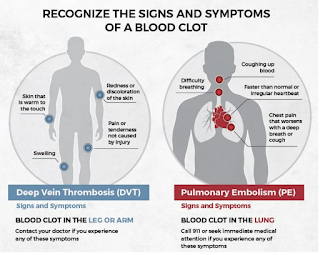
Common signs and symptoms of a DVT include swelling, usually in one leg (or arm); pain or tenderness not caused by injury; reddish or bluish skin discoloration; and/or skin that is warm to the touch. Contact your doctor as soon as possible if you have any of these DVT symptoms.


Common signs and symptoms of a PE include shortness of breath; chest pain that’s sharp; faster than normal or irregular heartbeat; unexplained cough, sometimes with blood; and/or low blood pressure or lightheadedness. Call 9-1-1 immediately if you experience any of these PE symptoms.

Click here for more signs and symptoms of blood clots in greater detail.

Learn more about blood clots
To learn more about blood clots -- including how to spot and prevent them -- go to the StoptheClot website. If you have any questions about DVT, you're welcome to contact the Vein Healthcare Center.

Wednesday, March 2, 2022

March is Blood Clot Awareness Month


Have you heard of Deep Vein Thrombosis (DVT) or Pulmonary Embolism (PE)? Maybe you're more familiar with the term blood clots. 

Thousands of lives are lost each year to preventable blood clots, so during Blood Clot Awareness Month -- and throughout the year -- many in the medical community, including Dr. Cindy Asbjornsen, help to spread the word about this common condition. 

Know your risk

The first and most important thing you can do to protect yourself is to learn if you are at risk. 

People being treated for cancer, hospitalized with COVID-19, or getting hip or knee replacements are all at greater risk for developing blood clots. But did you know that even athletes may have increased risk factors too?

Read this risk checklist to learn more.

Signs and symptoms

Common symptoms of a blood clot in the leg or arm (also known as Deep Vein Thrombosis or DVT) include swelling, pain or tenderness (not caused by injury), redness or discoloration of the skin, or skin that is warm to the touch.

Symptoms of a blood clot in the lungs (also known as a Pulmonary Embolism or PE) include difficulty breathing, chest pain that gets worse when you breathe deep or lie down, coughing or coughing up blood, or a heartbeat that's irregular or faster than normal. 


If you experience any signs or symptoms of blood clots, don't ignore them! Let your doctor know, or seek medical attention right away.

Prevention

The good news about blood clots is that they are preventable. Once you consider your risk factors and learn the signs and symptoms, then take a look at your family history. If you learn that there is a history of blood clots in your family, tell your doctor and let other family members know. 

One important way to prevent blood clots is to not be immobile for too long. If you're confined to a bed either in a hospital or at home (especially following hip or knee surgery), talk to your doctor about your options for blood clot prevention. And if you've been sitting for a long time, including in a car or plane seat, get up and move! Stand up, stretch your legs, and try to take a brief walk every couple of hours. Try this simple exercise to keep the blood flowing.


Treatment

If you do develop blood clots, your physician can help you navigate the best treatment choices for your specific situation. Anticoagulants, or so-called "blood thinners," are commonly prescribed. (Note that these medications don't actually "thin" the blood; what they do is slow the body's ability to form new clots and stop existing clots from getting bigger.

Other treatment options can include compression stockings, thrombolytic therapy, and vena cava filters. You can learn more about blood clot treatment here. 

Tuesday, March 25, 2014

Life after DVT

The goal for treatment of DVT is to prevent the blood clot from getting bigger and breaking loose, as well as to reduce the chances of another DVT (about one-third of DVT patients will have a recurrence within 10 years). Treatment can include anticoagulation medications (blood thinners) and graduated compression stockings. 

Among people who have had a DVT, one-third experience something called post-thrombotic syndrome, or PTS. Symptoms of PTS include swelling, redness, chronic leg pain, and ulcers. PTS can be expensive to treat and the pain and discomfort it causes can make it extremely difficult for people to get around.

Those with DVT should wear graduated compression stockings on a daily basis, since several studies strongly suggest that they can significantly reduce the likelihood of developing PTS. In fact, according to the American College of Chest Physicians, wearing compression stockings for two years following DVT reduces the incidence of post-thrombotic syndrome by half.

Unlike insufficiency in the superficial venous system, there is no FDA-approved treatment for PTS besides compression stockings and supportive care. 

Of course the best way to prevent PTS is to never have a blood clot in the first place. If you think you might have a DVT, get to the emergency room as soon as you can. In most cases, the affected area— usually in the leg— will be painful, swollen or tender, with a redness or discoloration of the skin. Even a muscle cramp that feels especially sharp and painful can be an indication of DVT. Early detection can go a long way toward preserving your quality of life-- or even saving your life.

Education, of course, is key to preventing this very common disease. Here are a few resources where you can learn more:

Tuesday, March 18, 2014

How compression can help-- and help prevent-- DVT


In addition to managing both acute and chronic DVT, compression can be a tool for prevention. When there are risk factors for DVT, such as long distance car or plane travel, immobility, or pregnancy, wearing compression stockings can reduce its occurrence. 

What do we mean by compression? Graduated compression stockings provide a gradient of pressure against the leg. The pressure is highest at the foot and ankle and gradually decreases as the garment rises up the leg. This pressure gradient makes it easier for the body to pump blood up towards the heart (the normal direction) and more difficult for gravity to pull blood downward.

Compression stockings require a prescription and can be purchased at many pharmacies, most major medical supply stores, and specialty stores. Your doctor can tell you if you need knee-highs, thigh-highs, or a “pantyhose” style. 

These days, compression stockings are fashionable, comfortable, and come in a wide variety of styles and colors. Though modern compression stockings usually look like socks or tights, putting them on can be a challenge. 

It’s important to note that “TED hose”— the “anti-embolic" stockings that are often worn after surgery to help prevent DVT— are not the same as graduated compression stockings. TED hose work well for patients who are bed bound, but won’t offer much benefit to patients who are up and walking.

There are many benefits to using graduated compression therapy besides reduced risk factors for DVT, but be sure to consult your physician first. Compression is not appropriate for all patients and can actually have adverse affects on patients with peripheral arterial disease.

To learn more about DVT, read our previous posts.

Tuesday, March 11, 2014

DVT: symptoms to look for and step toward prevention


Last week we described what DVT is and who is at the greatest risk for getting one. Now let's look at the most common symptoms to watch out for.

In most cases, the affected area-- usually in the leg-- will be painful, swollen or tender, with a redness or discoloration of the skin. Even a muscle cramp that feels especially sharp and painful can be an indication of DVT. DVT is a medical emergency, so any symptoms should be regarded as a DVT until proven otherwise, especially if someone is in a risk category. 
It's important to note that about half of the time, DVT has no symptoms at all.

The good news is that DVT can be prevented! And because DVT can occur with little or no warning, the best action to take is prevention. Without preventive treatment, for example, up to 60 percent of patients who undergo total hip replacement surgery may develop DVT. 

The Centers for Disease Control and Prevention (CDC) recommends the following tips for DVT prevention: 
  • Understand your level of risk, and talk to your doctor about DVT, especially if you're in a high-risk group.
  • Maintain a healthy weight, eat a healthy diet and don’t smoke.
  • Exercise regularly.
  • Move around as soon as possible after surgery, illness or injury. Even passive movement helps.
  • When traveling or sitting for more than four hours get up and walk around every few hours and exercise legs while sitting.
  • Drink plenty of water and avoid alcohol or caffeine.
To find out more about DVT symptoms and prevention, go to www.stoptheclot.org.

Tuesday, March 4, 2014

March is DVT Awareness Month


More than 1,240 Mainers succumb to DVT- (deep vein thrombosis) and PE-related (pulmonary embolism) deaths every year, according to the Mayo Clinic. And this estimate is likely on the low side.

In fact, the annual mortality rate of blood clots is greater than yearly deaths in the U.S. from breast cancer, AIDS and automobile accidents combined. Though most people know about these issues, DVT is still under-recognized. 

March is DVT and Blood Clot Awareness Month. It's a chance for the medical community to educate the public about a medical condition that affects approximately two million Americans annually.

All month long we'll be taking a closer look at DVT: what it is, who is at risk, and what you can do to prevent ever getting one.

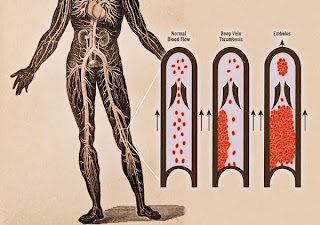
So what is DVT? Deep vein thrombosis (DVT) is a blood clot in the deep vein system. The danger is that the clot could break free from the vein wall and enter into the blood stream. The clot could then travel to the lungs and become a PE (pulmonary embolism), or to the brain and result in a stroke. DVT-related PE is the leading cause of preventable death in U.S. hospitals.

Anyone can get a DVT and at any age. Certain groups, however are at a greater risk of developing a life-threatening blood clot. 
  • Those with prolonged immobility or no mobility, like patients in the hospital or on bed rest, or long-distance travelers (so-called “economy class syndrome”)
  • People with blood-clotting issues, like those with a genetic disorder, or cancer patients undergoing surgical procedures
  • Patients with damage to their vein walls because of surgery or injury
  • Pregnant women are more susceptible to DVT because of hormonal changes
  • Seniors 
This is, by no means, a complete list of risks, and it's important to remember that risk factors can be compounded. For example, combining an existing blood clot disorder with immobility can dramatically raise the risk of deep vein thrombosis.

Having risk factors does not mean that you will surely get a DVT-- rather, you should be proactive about prevention.

Take this month to learn more about DVT, take an online risk assessment, and ask your physician if you may be at risk.

Thursday, March 28, 2013

DVT Awareness: Reality Check

Mortality Rates For Blood Clots Are Startling. But How Focused Are We On Awareness?  

In the past decade, breast cancer awareness campaigns have grown to include their own merchandise and
even a signature color. The general public seems highly educated about this issue and that’s a good thing. But did you know that the number of deaths from blood clots in the U.S. exceeds the number of deaths from what we consider some our biggest killers?

Studies show that in the United States and United Kingdom, VTEs (Venous Thromboembolisms) kill more people than AIDS, breast cancer, prostate cancer and traffic accidents combined. A study by the Mayo Clinic estimates that more than one thousand Mainers die as a result of blood clots every year (a figure that is likely on the low side).

According to recent federal research published in the Journal of the American Medical Association, it is estimated that venous thromboembolism (deep vein thrombosis and pulmonary embolisms collectively) costs the U.S. hospital system more than $340 million per year.

Our Efforts Are Making a Difference

  • In 2003, more than 50 organizations assembled in Washington, DC, to discuss the need to make DVT a national public health priority. This gathering resulted in the establishment of the Coalition to Prevent DVT, which declared March as DVT Awareness Month. Their efforts included encouraging DVT screenings, producing an educational video with mobility tips and exercises, and customizing an RV to visit hospitals and communities across the country. 
  • Here in Maine, then-Governor John Baldacci, proclaimed November 2008 as “Thrombosis Awareness Month" in the state.  
  • The mission of the National Blood Clot Association (NBCA), also founded in 2003, is to educate people about the danger, prevention, and treatment of blood clots and clotting disorders, and DVT awareness is a cornerstone of its work.
  • In 2009, the NBCA received two program grants totaling $2.6 million over five years from the Centers for Disease Control and Prevention. These funds support programs directed at curbing the devastating effects caused each year to over 350,000 Americans who develop a blood clot. 

Because of the efforts of these and other patient-led and professional advocacy groups, public awareness of DVT and blood clots is increasing, but it hasn’t yet reached the level of ubiquity that breast cancer awareness has.

Learn More About DVT Prevention 

If you are a patient, ask your physician about DVT prevention, or make an appointment with a vein specialist to learn about your risk and prevention techniques. Or, find out more from the following online resources:

StopTheClot.org – from The National Blood Clot Alliance
PreventDVT.org – created by Coalition to Prevent Deep-Vein Thrombosis
OneBreath.org – from The CHEST Foundation of the ACCP
ThisIsSerious.org – information about women and DVT

Are you a Physician?

Primary care doctors are on the front lines of reducing the growing number of people suffering with symptoms of venous disease.  Vein Health News serves as a resource for well-researched meaningful information that you can pass on to your patients.

Have Vein Health News delivered to your office. Subscribe to Vein Health News or view the current issue.


Tuesday, March 19, 2013

Blood Clots Can Strike Long-distance Travelers, Patients on Bed Rest

Phlebologist Shares Prevention Techniques to Prevent Deadly Clots  

Deep vein thrombosis affects approximately 2 million Americans every year. What can you do to prevent DVT?

“The goals are to prevent the blood clot from getting bigger and breaking loose and to reduce the chances of another clot,” said Dr. Cindy Asbjornsen.

Dr. Asbjornsen is a nationally recognized vein specialist, member of the American College of Phlebology, and a board certified Phlebologist. She is the founder of the Vein Healthcare Center in South Portland and the Maine Phlebology Association. This month, which is DVT Awareness Month, Dr. Asbjornsen shared prevention techniques with the Bangor Daily News.

Recommendations include moving as soon as possible after an illness or injury, getting up to walk during travel or periods of sitting for more than four hours, and pumping your feet during times when you are on bed rest. Read more Dangerous Blood Clots Can Strike.

DVT is a serious, life-threatening condition that requires immediate medical care but it can be prevented. Find out more about DVT. 

DVT Dangers: Are You At Risk of a Blood Clot?

March is DVT Awareness Month, A Time to Learn About Your Risk


Two million Americans suffer from blood clots every year. In fact, more Americans die of DVT and PE each year than die from breast cancer, AIDS and automobile accidents combined. But what is it and why is it so dangerous?

What is DVT? 

Deep vein thrombosis (DVT), is a blood clot in the deep vein system. The danger of DVT is that the clot could break free from the vein wall and enter into the blood stream. The clot could then travel to the lungs and become a PE (pulmonary embolism), or to the brain and result in a stroke. DVT-related PE is the leading cause of preventable death in U.S. hospitals. Learn more about how DVT and PE put your health at risk.

Who’s at Risk? 

Many factors contribute to DVT risk, including age, inherited blood clotting disorders, certain medications, or vein injuries. Sitting in a confined space or traveling for long periods can also increase the risk of DVT. There are a number of risk assessment quizzes available online at sites such as StoptheClot.org and PreventDVT.org.

What are the Symptoms?

In most cases, the affected area— usually in the leg— will be painful, swollen or tender, with a redness or discoloration of the skin. Even a muscle cramp that feels especially sharp and painful can be an indication of DVT. DVT is a medical emergency, so any symptoms should be regarded as a DVT until proven otherwise, especially if someone is in a risk category. About half of the time, DVT has no symptoms at all.


DVT Awareness Month: Learn About Your Risk In March

March is DVT Awareness Month, The perfect time for everyone to find out their level of risk, and talk to someone on their medical team, especially if they’re in a high-risk group.

Find out more about yours DVT Risk Factors, symptoms and ways to prevent DVT at the Centers for Disease Control and Prevention.

Do you have questions about DVT, venous disease and its treatment? Find out more by visiting Vein Healthcare Center.