Showing posts with label laser treatment legs. Show all posts

Wednesday, April 28, 2021

Year of the Nurse


In 1993, the American Nurses Association (ANA) declared May 6 as the start of National Nurses Week. The annual celebration usually culminates on May 12, Florence Nightingale's birthday.


Last year, the World Health Assembly, the governing body of WHO, designated 2020 as the Year of the Nurse and Midwife -- and the ANA followed WHO’s lead by declaring a U.S. extension of the Year of the Nurse into 2021.


Nurses have always gone above and beyond to serve our communities, but since the pandemic started over a year ago, we've all seen the impact that nurses make every day. That's why ANA chose the theme "Nurses Make a Difference" to recognize the contribution of nurses during the month of May.


At the Vein Healthcare Center, we know how hard nurses work, and we're well aware that venous disease can be a real occupational hazard for nurses who are often on their feet for hours at a time. Here are just a few tips for how nurses can take care of themselves by taking care of their legs and feet. ANA is also providing videos and other resources to help nurses celebrate and participate.


Happy National Nurses Week, Month, and Year to all of the nurses out there. Thank you for everything you do!


Visit the Vein Healthcare Center in South Portland, Maine to learn more about the symptoms of vein disease and how to treat it.

Tuesday, October 16, 2018

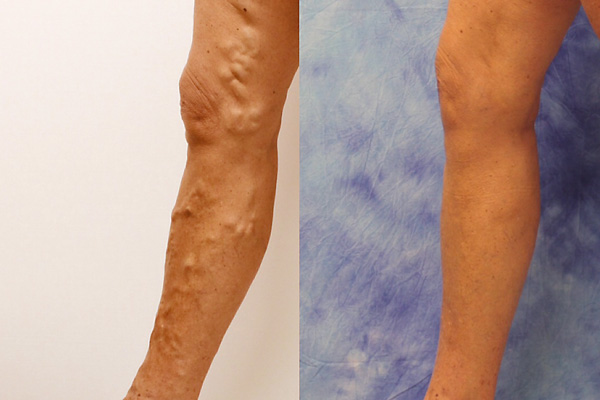
Before & After: Visible results from vein treatment

This 56-year-old VHC patient had all the typical symptoms of venous disease, in addition to a history of ulcers at her ankle, bleeding from her varicosities, and a past vein stripping. EVLA treatment, followed by five sessions of sclerotherapy, resolved all of her issues.


Many of the symptoms of venous disease are invisible to the eye, though they affect people greatly. For example, one Vein Healthcare Center patient had no pain in her legs, but they felt "like cement" at the end of the day. She couldn't move them!

For other patients, vein problems are right there on the surface. 

Every single case is different so, of course, results vary. But when the source of the problem is located (using ultrasound mapping), then treatment is more likely to be effective.

Since a picture is worth a thousand words, take a look at pictures of former patients of the Vein Healthcare Center. Every person has different vein issues, and we customize a treatment plan for each individual to address his or her specific goals. 

If you're ready to discuss your vein health, contact us! We're happy to answer your questions.


Tuesday, September 4, 2018

What is phlebology?


Veins are not a new invention. But phlebology – the study and treatment of veins and venous disease – is a relatively recent field of medicine. Once a sideline of vascular surgeons (whose focus was and is mainly arteries), phlebology is a burgeoning discipline that continues to add skilled specialists to its ranks.

Dr. Raymond Tournay first coined the term phlebology in 1947: “phlebo” meaning “vein,” and “ology,” meaning any science or branch of knowledge. Tournay and his colleagues founded the French Society of Phlebology (SFP), also in 1947, and he was its General Secretary for many years.

The American College of Phlebology (ACP) was founded in 1985 by Dr. Anton Butie, though its original name was the North American Society of Phlebology. Its purpose was to bring together physicians and surgeons from diverse specialties who shared an interest in venous disease. The Society started with just fourteen members. Today, the ACP has over 2,000 physicians and allied health professional members, including physician assistantsadvanced practice nurses, and ultrasound specialists and technologists.  

In 2005, phlebology was approved for inclusion in the list of self-designated medical specialties sanctioned by the American Medical Association (AMA). The decision by the AMA meant that physicians who diagnose and treat venous disorders, including varicose veins, could select phlebology as their primary or secondary area of practice.

Dr. Helane Fronek, editor of The Fundamentals of Phlebology: Venous Disease for Clinicians and a pioneer in the field, called the recognition “tremendous.” 

In 2007, the American Osteopathic Association (AOA) followed the AMA’s lead and officially recognized phlebology as a distinct practice discipline.

Venous disease is extraordinarily common, but historically it has been poorly understood in the medical community. However, as the awareness of vein disorders and modern treatments has grown— among healthcare professionals and the general public— history is quickly changing.

To see how phlebology can improve your health and quality of life, contact us at Vein Healthcare Center. We're happy to answer any of your vein questions.

Tuesday, August 21, 2018

In the swim: one patient's perspective


For some active folks in New England, summer means swimming. For Nathan, age 44, swimming isn't just a hobby, it's his passion. 

A swimmer since his youth, Nathan began to develop varicose veins in both legs in his twenties. The blue, raised veins in his left leg were especially severe. He asked several doctors and physical therapists about it over the years, showing them how the bulging veins were considerably warmer than the rest of his leg. They all told him that there was nothing he could do about it, sometimes suggesting aspirin or compression sleeves to manage the discomfort.

It wasn’t until Nathan visited Dr. Asbjornsen, a Board certified phlebologist, that he realized that his symptoms—the cramping, fatigue, and varicose veins—were related to circulation and venous disease. After a physical exam, diagnostic ultrasound evaluation, and a full review of his medical history, Nathan learned that he was predisposed to varicose veins and that if he didn’t treat them, his condition would continue to get worse.

He decided to have the endovenouslaser ablation (EVLA) procedure done on his left leg, and then about eight months later, he had the procedure on his right leg. Recovery from both treatments was relatively quick, and the results were obvious. The cramping and pain went away, and his shoe size went down half a size because there was no more swelling.

Nathan’s quality of life improved, and so has his swimming: “I have new legs as far as I’m concerned. I have more endurance, and I can push myself much harder. I have more cardio, which is surprising to me. I can go further, faster, because the blood is returning and able to take oxygen to the places I need it. I was not aware of how much better I could feel—or that I could be a faster swimmer.”

Nathan had no idea what he was in for when he got his varicose veins treated. While he did expect to feel some relief from the leg pain and cramping he had experienced for years, he did not expect to become a better athlete.

Are you looking for relief from leg pain, varicose veins, or other venous issues? Contact the Vein Healthcare Center to make an appointment for a thorough exam. 

Tuesday, April 24, 2018

Good post-EVLA care can prevent complications


Endovenous laser ablation, or EVLA, is a minimally invasive treatment used to address specific large varicose veins in the legs. It is considered the gold standard in treatment of venous symptoms, and has largely replaced previous, more invasive standards of care, such as vein stripping. 

EVLA has opened the door for many patients with venous disorders to eliminate symptoms and improve their appearance with minimal time investment and minimal pain, but there are some things to be aware of after EVLA treatment.

As the leg heals, there may be bruising and swelling of the treated area, however, both are self-limited and usually resolve within the first two weeks after the EVLA procedure. 

Phlebitis is another common adverse complication -- one that commonly occurs with any IV stick, or even spontaneously from varicose veins. It is more common with EVLA because with this procedure, we are intentionally "irritating" the vein. The national incidence for resulting phlebitis is recorded at ~30%, however, at my office, we instruct patients who experience any post-procedure pain to use elevation, heat and non-steroidal anti-inflammatory medications, essentially treating pain prophylactically (as a preventative measure). Thus, we tend to have a much lower incidence of post-procedure phlebitis at VHC.

We also guide our patients in their post-EVLA care so that they can experience effective healing and a quick recovery.

If you'd like to learn more about EVLA and other vein treatments, contact us. We're happy to answer your questions or schedule an evaluation of your vein health.

Tuesday, February 28, 2017

Hidden signs of vein disease

Sometimes vein disease is unmistakable. Large, bulging varicose veins are a sure sign, as are bluish spider veins. But sometimes vein issues are harder to detect.

The 65-year-old woman in the picture to the right sought help because of veins in her right leg, but in her initial evaluation it became apparent through skilled ultrasound mapping that both legs were affected. Even she didn’t realize the disease was actually worse in her left leg than her right.

Other symptoms that may indicate vein problems are heaviness or aching in the legs. Swelling, throbbing, cramping, or burning sensations in the leg are other signs, as are restless legs. If you think you might be suffering from one or more symptoms of vein disease, ask yourself these 12 questions to find out more.

As for the patient in the picture, she had EVLA treatment on both legs, followed by ultrasound-guided sclerotherapy. Both of her legs – and her quality of life – have distinctly improved.

Tuesday, February 7, 2017

Can I get vein treatment if I’m on blood thinners or chronic pain medication?

Yes, it is possible to be treated for venous issues when taking either blood thinners or chronic pain medications. In fact, for people who take these types of medications, treating their veins is not only possible, but can even be advantageous.

Blood thinners should not be an issue for someone receiving vein treatment, although those patients may be more prone to post-op bruising. However, blood thinners can be a relative contraindication – reason to withhold a certain medical treatment due to possible harm – in some cases. Your board-certified vein specialist should discuss with you if that is a potential issue.

As for chronic pain medications, this should have no bearing at all on vein procedures. In many cases, patients who are prescribed pain medication for leg pain are able to discontinue taking their chronic pain medications after their venous issues have been resolved.

The standard protocol at the VeinHealthcare Center is to offer patients a muscle relaxant before treatment – not because the procedure itself is painful, but because the time spent lying on the exam table may cause a strain on their neck or back. Every patient is different in this regard, and we offer pillows, bolts, blankets and hot packs to make the experience as comfortable as possible, whether the patient opts for pain medication or not.

Of course, patients should always tell their physician and care team about any medications that he or she is taking, no matter what the medical treatment, including vein treatment.

Tuesday, November 22, 2016

One of our patients says: it’s definitely worth it

It’s that time of year when many of us review the things we’re grateful for. One of our patients is thankful for the advances in vein treatment – and for the way her quality of life has improved since her own treatment.

“About 15 years ago I had my varicose veins stripped the old way – surgery. That doctor made an incision from my thigh all the way down to my ankle. It required many stitches and a long recovery. Back then they didn’t have the nice compression hose or knee-highs that they do now; the hoses were thick, rubber and so uncomfortable I stopped wearing them.

After I had my children, a varicose vein formed in the middle of my right leg, and then a big varicosity starting forming on my knee. Every time summer came I always made sure to wear capri-length pants, and I hated wearing bathing suits.

I was reluctant to get my veins treated again because of my experience with the surgery 15 years ago, but I did my research and found Dr. Asbjornsen and the Vein Healthcare Center. I went in to talk to Dr. Cindy, and she and her ultrasound technician took an hour to find out where the source of the problem was. They took the time to find the source of why the varicose vein recurred in my right leg.

I went ahead and did the EVLA and was amazed at how fast it was – only an hour to stop the leak at the upper groin area. I had a pretty big bruise, but I used the Arnicare they gave me and wore my compression stockings. My thigh recovered so quickly!

Before the treatment you could actually feel the heat of the vein through my clothes. You could see the outline of the vein when I wore leggings, it was that bad. Now I can wear anything I want, even shorts. It would hurt at night too, but not anymore.

I have before and after pictures on my phone that I show to everyone! I tell people: Hey, just do it. It’s easy. Yeah, you have to wear stockings for a little while, but it’s definitely worth it.

I would absolutely recommend VHC. The whole practice was professional. They were very understanding about making appointments and worked with me the whole way. The doctor and her staff took a lot of time to explain the problem to me, and how they would resolve it. I think Dr. Cindy is a really good doctor. I felt very comfortable with her and never, ever felt rushed.”

-- Deanna B., 54, Old Orchard Beach, ME

We’re grateful for patients who are willing to share their experiences. To read more of our patients’ stories click here. Thank you for reading the @VHC blog – and have a happy and healthy holiday season!

Tuesday, January 20, 2015

Are vein treatments permanent?

Have you ever wondered if vein treatments are permanent?

According to Dr. Cindy Asbjornsen, founder of the Vein Healthcare Center, the short answer is yes. However, that does not mean that a person who has one vein issue will never have another problematic vein.

What that means is once a vein is treated with a modern procedure, such as endovenous ablation, or “EVLA,” the success rates quoted in the supporting literature vary from the high 80th percentile to the high 90th percentile. In other words, less than 20 percent of patients will need to have the vein that was treated ever treated again.

Dr. Asbjornsen explains: “When I see most of my patients for a six or 12 month follow up, the problematic vein that underwent treatment is completely reabsorbed by the body. Because that vein no longer exists, it cannot cause problems in the future.”

Though the treated vein is taken care of, all the veins in the body have the same genetic makeup and have been exposed to the same environmental stresses (generally speaking) and thus, have the same risk of failing. Thus, if a patient has one bad vein, it is possible that at some point they will have other bad veins.

For this reason, Dr. Asbjornsen tries to spend time with patients at every visit counseling him or her on healthy tips for healthy veins. Small lifestyle changes can make a big difference in managing chronic venous issues and preventing additional problems.

Tuesday, January 6, 2015

Knowledge is Power

If you’ve thought about “doing something” about your varicose veins or heavy, achy legs but aren’t sure what exactly to do, here’s a suggestion: learn more vein disease and the available options for treatment. By reading this blog you’re on your way, and in this post we’re going to get more specific. After all, knowledge is power!

When researching on the Web, go to trusted sites that specialize in phlebology (the study of vein disease and vein healthcare), such as the American College of Phlebology (www.phlebology.org) and the American Venous Forum (www.veinforum.org). The Vein Healthcare Center website also provides reliable information for both patients and physicians (www.veinhealthcare.com).

If you prefer reading books to screens, then check out our previous post about vein health books.

Gathering information is important, but don’t worry yourself needlessly because of too many visits to WebMD! If you really want to understand the root of your vein problems—and possible treatments—then a visit to a Board-certified vein specialist is best.

Tuesday, December 16, 2014

A Patient Testimonial

We're ending the year on a positive note, with this testimonial of a patient whose health--and quality of life--has improved since seeking treatment for her vein problems.
“My legs were a mess. I had varicose veins on the front of my left leg that started in the back, upper part of my thigh and wound around toward my shin. My lower legs often felt heavy and sore. Dr. Asbjornsen evaluated my legs and recommended a treatment plan. Now my legs look great, and I don’t have any more achiness, throbbing, or tightness.  
I chose Dr. Asbjornsen because she listened to what I wanted and gave me other options like compression stockings and tips to alleviate my discomfort. I felt like she was looking out for me, not just pushing to have a procedure done. I thought everyone at Vein Healthcare Center was exceptional. Every time I called the office with a question, they knew who I was and made me feel like I was important.”– Christina J., 40, Lisbon Falls, ME
Read more patient testimonials. See if you may have symptoms of venous disease. Consider making an appointment with Dr. Cindy Asbjornsen, a board certified vein specialist.

And, of course, have a healthy, happy and peaceful holiday season!


Tuesday, July 22, 2014

What women can do about varicose veins (and free eArticle)


It is a common misconception that only women experience troublesome veins. In the U.S. one in three people— including men— has some form of venous disease. Still, gender does make a difference. Why?

A woman has three potential “high risk” times in her life that men do not. Significant hormonal fluctuations typically happen during menarche (menstruation), pregnancy, and menopause. Surges in the hormone progesterone, in particular, can cause veins to stretch, sometimes enough for vein valves to tear and fail to do their job. Women who have venous insufficiency may notice that their symptoms worsen during menstruation.

Even after menopause, when most hormone fluctuations have stopped, a woman’s risk of vein disease continues to increase with age. There is a higher incidence of varicose veins in older women, because as the body ages, it produces less collagen, which causes the veins (and vein valves) to become weaker.

With the right information, women have the ability to reduce their risk of developing venous disease and/or decrease its severity. Preventative measures include: wearing graduated compression stockings; living an active lifestyle; and maintaining a healthy weight.

There are also a number of effective, minimally invasive treatments available for varicose veins and other symptoms of vein disease. If you’d like to learn more about how women can improve their vein health, read our latest eArticle “Women and Vein Treatments.” Click here to download your free copy.

Tuesday, June 17, 2014

Varicose vein treatment in the summer, Part 2


In our last post we discussed some of the treatments available for venous disease, including varicose veins. Now we frankly discuss one possible drawback to seeking treatment for vein problems in the summer.

Following every vein procedure, patients must wear graduated compression stockings. The length of time that patients are prescribed compression stockings is highly variable, depending upon the patient and the procedure. It could be as short as three days for some light-assisted sclerotherapy, or as long as two weeks for endovenous laser ablations or ambulatory phlebectomies. The lighter, sheerer stockings are better tolerated during the summer months, but tend to be less durable than some of the thicker options often work in the winter.

Although some people choose to delay treatment until after summer is over, others prefer to seek treatment as soon as possible. For those who choose not to undergo a vein procedure during the summer, it is still a good time to think about vein health.


It can take several months or more for the complete resolution of veins that have undergone treatments, so people can plan for next summer by scheduling an evaluation now. Whether or not one decides to pursue intervention for varicose veins or other venous issues, here are tips for vein relief in the summer.

No matter what the season, finding a qualified vein specialist can lead to an improved quality of life and better overall health.