Showing posts with label help for leg veins. Show all posts

Monday, June 1, 2026

Men & Vein Health: June 15-21 is International Men’s Health Week!

June is Men’s Health Month! Throughout June, Men’s Health Network shares education, amplifies awareness, and distributes free resources to improve the health of men, boys, and the families who care about them.

At the Vein Healthcare Center, we know that vein health is an important part of everyone’s overall health and wellbeing. According to epidemiologic studies of the 1960s and 70s, women are more likely than men to have venous disease, including varicose veins and spider veins. More recent research shows, however, that this may not be the case. We also know that men are more likely to suffer from vein issues and tend to present with the worst vein problems, such as ulcers. Why is this the case?
 
Phlebologists have often observed that women tend to get help for their vein issues right away, while men will often wait until the problem becomes too painful to ignore. The result is, often, leg ulcers that are difficult to heal. Even men who are athletic are susceptible to venous disease. Sometimes men with vein problems misinterpret their symptoms, mistaking the pains of venous disease for a strained or pulled muscle.
 
The important thing for patients with vein issues is to seek help as soon as symptoms present themselves, regardless of his or her gender. Venous conditions like varicose veins get worse with time, and the longer one waits, the more extensive the condition could become—and often, the treatment. Anatomically, men's leg veins are no different from women's veins. Looking at a leg ultrasound, one would be hard-pressed to tell the difference between a man's and a woman's legs.
 
The key for male patients is to get evaluated as soon as the symptoms become apparent. Common symptoms of venous disease include:
  • LEG FATIGUE OR HEAVINESS: When legs feel good upon waking but are intensely tired or heavy at the end of the day, this is an early warning sign.
  • SWELLING: Swelling can be caused by many things but also serves as a very early warning sign for vein problems. In any case, legs that frequently swell shouldn't be ignored.
  • SKIN CHANGES: Redness, skin thickening or other color changes on the legs and/or ankles is a common (and commonly overlooked) symptom. Other skin changes, such as dermatitis, cellulitis, dry or scaly skin, or brown "stains" on the skin can be signs of advanced venous disease and should be evaluated by a physician.
  • SPIDER VEINS: Spider veins are blue or purple-colored veins that occur under the skin but are close enough to be seen on the surface. Treating them can improve appearance, as well as stop the progression of venous disease at its source.
  • VARICOSE VEINS: Another sign of early-stage venous disease, varicose veins are visible veins in the leg that bulge, often protruding through the skin.
  • ULCERS: An open wound on the leg or ankle that fails to heal can be the result of ongoing venous disease. In fact, "venous ulcers" in the leg are often an indication that venous disease has reached an advanced stage.

Venous disease is a progressive disease that is not curable, but for most people, even debilitating symptoms are completely treatable. Today's vein treatments are done on an outpatient basis and are minimally invasive and nearly pain-free. Treatment can stop the progression of venous disease and its complications for those in all stages of the disease; however, early intervention is generally best-tolerated and provides the most improved quality of life. For those struggling with late-stage symptoms, it is still possible to restore health.
 
To learn more about vein treatments for venous ulcers or other vein issues, contact us at the Vein Healthcare Center today to schedule an evaluation. Our goal is to help your legs feel better!

Monday, January 20, 2020

10 Tips To Make Your Legs Feel Better


If your legs feel achy or tired, it may be a venous issue. Best to check with a vein specialist for a thorough evaluation. (See tip #10 below!)


In the meantime, there are things you can do to alleviate your discomfort and perhaps even prevent your symptoms from progressing:


1. Elevate. Elevate your legs above your heart as often as possible -- for as long as 30 minutes or as briefly as three minutes. The best time is after you have been standing or after a hot shower.


2. Wear loose-fitting clothing. Avoid tight-fitting clothes around your legs and waist. It will help by not impeding circulation in your lower body.


3. Avoid high heels. High-heeled shoes shorten the muscles in the back of your leg and prevent deep veins from operating at their full capacity.


4. Sit properly. Focus on good posture and avoid crossing your legs  or sitting in ways that can compress veins for prolonged periods.


5. Walk. Walking causes the rhythmic contraction of calf muscles and helps promote blood flow to the heart. Walk at least 30 minutes every day – all at once, or in shorter increments.


6. Take a break. Take frequent walking breaks to avoid sitting or standing for periods of more than two hours.


7. Wear compression stockings. Wearing compression stockings purchased from your pharmacy will help promote the flow of blood when you are flying, on your feet for long periods, or carrying heavy loads.


8. Don’t smoke. Smoking and exposure to second-hand smoke constricts veins and affects overall circulation.


9. Know your history. Women with a family history of vein disorders, or those who have relatives with varicose veins, should wear compression stockings during menarche and menopause, and during pregnancy – most importantly, during the first trimester.


10. See a vein specialist. Contact a board certified phlebologist for a screening and evaluation, or to find out more about risks, prevention, and treatment of venous disease.

To make an appointment with Dr. Cindy Asbjornsen, founder of the Vein Healthcare Center, click here or call 207-221-7799. We can help make your legs feel better!

Tuesday, April 23, 2019

Healthy Veins seminar with Dr. Cindy

Dr. Cindy Asbjornsen, Founder of the Vein Healthcare Center, truly loves to educate people -- patients and doctors, alike -- about vein health.

Dr. Asbjornsen recently gave a community seminar at Coastal Pharmacy & Wellness in Portland, Maine, where she discussed the basics of how veins work...and what to do when they don't. And, she explained what phlebology is!

Participants asked tons of great questions, including what do do about the so-called "Economy Class Syndrome" and DVT. 

Dr. Asbjornsen explained that you don't need to be in economy class (or even on an airplane) to be at risk for bad circulation. It's really about sitting in the same position for too long. A long car ride, for example, can have the same effect. 

Dr. Cindy's simple and practical advice for keeping your veins healthy during a lengthy car ride is three-fold. One, do the calf pump frequently (also known as "the foot pump"). Two, stay hydrated. Three, stop for restroom breaks! That will get your calf muscles moving AND give you a reason to keep drinking water during the ride.

Click here to watch the vein seminar. Click here to contact schedule an appointment, or to ask us any questions. We look forward to hearing from you!

Tuesday, February 5, 2019

What is Pelvic Venous Congestion Syndrome?

Veins have one-way valves that help keep blood flowing toward the heart. If the valves are weak or damaged, blood can flow in the wrong direction in the veins in the legs and feet, often causing them to swell. When this happens near the pelvis, it is called pelvic venous congestion syndrome. Simply put, varicose can also develop internally, in the pelvis, uterus and ovaries. 

Those internal varicose veins can cause symptoms similar to those in the legs. Patients will often have visible varicose veins on their upper legs or labia, but not always. The main symptom is pelvic pain that lasts for six months or more. 

Patients with PVCS report a prolonged deep and dull ache, often associated with movement, posture, and activities that increase abdominal pressure. Like varicose veins in the leg, the achiness that increases with prolonged standing can often be relieved by lying flat or elevating the legs.

Chronic pelvic pain (CPP) occurs below the belly button in the pelvis. The pain may be unilateral or bilateral – meaning on one side of the pelvis or both – and is often more pronounced on one side than the other. The pain is chronic and appears to have no obvious source. Symptoms may also include rectal discomfort or increased urinary frequency, bloating or gastrointestinal (GI) symptoms.

According to some studies, more than 26% of women suffer from CPP, but data about its prevalence is incomplete. When taking into account the number of factors that could also cause chronic pelvic pain, one can see how misdiagnosis by medical professionals might occur. 

Conditions range from problems in the gastrointestinal tract to gynecologic diseases and urologic abnormalities. While some of these conditions are easily diagnosed, other causes of chronic pelvic pain are extremely difficult to recognize and have often been underdiagnosed or overlooked– even though studies show that PVCS occurs in up to 30 percent of patients who have chronic pelvic pain. 


Pelvic venous congestion syndrome, or PVCS, although easy to describe can be challenging to diagnose. In fact, PVCS is often misdiagnosed or never diagnosed at all. 

To learn more about PVCS and how it is diagnosed and treated, read the latest issue of Vein Health News. If you think your pelvic pain may be related to your venous health, feel free to contact us at the Vein Healthcare Center.

Tuesday, October 16, 2018

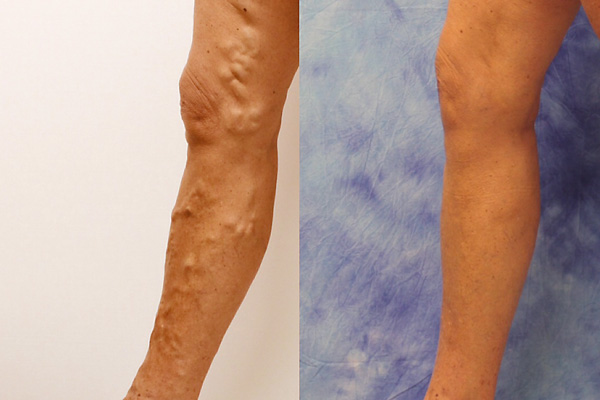
Before & After: Visible results from vein treatment

This 56-year-old VHC patient had all the typical symptoms of venous disease, in addition to a history of ulcers at her ankle, bleeding from her varicosities, and a past vein stripping. EVLA treatment, followed by five sessions of sclerotherapy, resolved all of her issues.


Many of the symptoms of venous disease are invisible to the eye, though they affect people greatly. For example, one Vein Healthcare Center patient had no pain in her legs, but they felt "like cement" at the end of the day. She couldn't move them!

For other patients, vein problems are right there on the surface. 

Every single case is different so, of course, results vary. But when the source of the problem is located (using ultrasound mapping), then treatment is more likely to be effective.

Since a picture is worth a thousand words, take a look at pictures of former patients of the Vein Healthcare Center. Every person has different vein issues, and we customize a treatment plan for each individual to address his or her specific goals. 

If you're ready to discuss your vein health, contact us! We're happy to answer your questions.


Thursday, May 10, 2018

Celebrating women's health

The 19th annual National Women's Health Week kicks off on Mother's Day, May 13! Led by the U.S. Department of Health and Human Services' Office on Women’s Health, it's a chance for women to consider their own health and take steps toward being healthier.

At the Vein Healthcare Center, we encourage all women to pay attention to what their bodies are telling them, including their legs -- especially if venous disease seems to run in the family. 

To celebrate women's health, this week and every week, we'd like to offer you our eArticle called "Women and Vein Treatments." You can learn about the three potential high-risk times that women are vulnerable to venous disease, how pregnancy impacts veins, and what kind of vein treatments are available today.

With the right information, women have the ability to reduce their risk of developing venous disease or decrease its severity. If you'd like to find out more about your vein health and schedule an evaluation, don't hesitate to contact us at the Vein Healthcare Center. 


Tuesday, April 24, 2018

Good post-EVLA care can prevent complications


Endovenous laser ablation, or EVLA, is a minimally invasive treatment used to address specific large varicose veins in the legs. It is considered the gold standard in treatment of venous symptoms, and has largely replaced previous, more invasive standards of care, such as vein stripping. 

EVLA has opened the door for many patients with venous disorders to eliminate symptoms and improve their appearance with minimal time investment and minimal pain, but there are some things to be aware of after EVLA treatment.

As the leg heals, there may be bruising and swelling of the treated area, however, both are self-limited and usually resolve within the first two weeks after the EVLA procedure. 

Phlebitis is another common adverse complication -- one that commonly occurs with any IV stick, or even spontaneously from varicose veins. It is more common with EVLA because with this procedure, we are intentionally "irritating" the vein. The national incidence for resulting phlebitis is recorded at ~30%, however, at my office, we instruct patients who experience any post-procedure pain to use elevation, heat and non-steroidal anti-inflammatory medications, essentially treating pain prophylactically (as a preventative measure). Thus, we tend to have a much lower incidence of post-procedure phlebitis at VHC.

We also guide our patients in their post-EVLA care so that they can experience effective healing and a quick recovery.

If you'd like to learn more about EVLA and other vein treatments, contact us. We're happy to answer your questions or schedule an evaluation of your vein health.

Tuesday, April 3, 2018

Listen to your legs

Sometimes venous disease is very obvious. Bulging, twisty veins that wrap around your legs is one manifestation. Purple spidery veins on the backs of your thighs may be another. But there are other, more subtle clues that your veins may not be working as well as they should.

Do your legs sometimes feel achy or throbbing? Do you have leg cramps in the middle of the night? Are your legs exhausted by the end of the day?


These may be signs of vein disease, and it's best not to ignore them for a couple of reasons. For one thing, your body is trying to tell you something is wrong. Waiting for the issues to go away on their own may actually make them worse as time goes on. If you find out what the problem is, you can take steps to fix it!


Sue, age 63, from North Yarmouth, Maine is one of our patients at the Vein Healthcare Center. Here's what Sue had to say about her own experience:

“I work at a daycare and when I came home at the end of the day, my legs were like cement. I could not move them. It was affecting me tremendously but because it didn’t hurt, I had no idea my veins were the problem. I had EVLA done in both legs, and they felt much lighter right away.”
You can read more patient experiences like Sue's by clicking here. If you are having issues with your legs that you can't quite explain, take a look at this list of questions, and see if you can relate. Finally, contact us at the Vein Healthcare Center to make an appointment for an evaluation of your venous system. There may be a way to fix the problem.

Tuesday, February 13, 2018

Love your feet

If you take care of your feet, they’ll take care of you! In our latest issue of Vein Health News, we look at ways to treat sore feet and legs for people who work on their feet for long periods of time.

We spoke to Ginger LeClair, a nail technician at Coco Cheveux Salon in South Portland, Maine. Nurses, doctors, and pharmacists – men and women – make up about 20% of her clientele.

Here are a few of Ms. LeClair’s expert tips for keeping your feet feeling good:
  • The most common foot problem I see is general foot fatigue from standing for hours on end.
  • Rough, dry heels are another common issue. If left untreated, the dryness can eventually lead to painful cracks (fissures), which is harder to remedy. Once they start, they usually just get worse.
  • Use a pumice block when you shower to clean away any dead or rough skin on the heels.
  • Apply a foot cream at night, so it absorbs while you're at rest.
If you are having foot or leg discomfort, pain, or extreme fatigue at the end of the day, schedule an evaluation at the Vein Healthcare Center to find out if it's venous (vein) related. There are modern treatments that are minimally invasive so you can get back to work!

Tuesday, January 2, 2018

We love compression!

At the Vein Healthcare Center, we talk about graduated compression. A lot. 


In fact, Dr. Asbjornsen wears 20-30mmHg socks or stockings almost every day. Doctors are always on their feet, and graduated compression fights—and beats—gravity, keeping the blood circulating from the legs back up to the heart.


In our last issue of Vein Health News, the cover story was all about caring for your legs and feet when you’re constantly using them. Our colleague Tom Musone from the compression company Juzo gave us six tips about how to use compression to make your legs feel better:

1. Wearing compression every day can prevent edema (leg swelling), alleviate venous symptoms, and make your legs feel better overall.

2. Make sure you wear graduated compression stockings. That means the pressure is highest at the foot and ankle and gradually decreases as the garment rises up the leg. This pressure gradient makes it easier for the body to pump blood up towards the heart and more difficult for gravity to pull blood downward.

3. Compression also increases the pressure in the subcutaneous tissue, which helps to reduce and prevent swelling by moving excess fluid back into the capillaries.

4. Gradient compression is expressed in millimeters of mercury, or mmHg. Unless otherwise directed by a medical professional, look for 15-20 mmHg or 20-30 mmHg.

5. Current evidence supports wearing either knee-high or thigh-high style compression stockings when standing for prolonged periods. A good fit is the most important factor.

6. Get fitted by a certified fitter to find the brand, product, and style that’s right for you. These days there are dozens to choose from.


Dr. Asbjornsen swears that even if she weren’t a vein specialist prescribing compression stockings to patients, she would still tout the benefits of wearing it, because her legs feel so good at the end of the day!


If you have any questions about graduated compression for venous relief, prevention, or both, contact us at the Vein Healthcare Center. We’re happy to educate about the benefits of compression.

Tuesday, November 28, 2017

Preventing phlebitis

In our last post, we explained phlebitis, when a vein in the superficial vein system becomes inflamed or swollen. In this post we talk about prevention.

Dr. Cindy Asbjornsen advises that all the things that prevent DVT (deep vein thrombosis) also keep phlebitis at bay:

If you’re interested in learning more about the topic of phlebitis, you can read about it in our current issue of Vein Health News.

Do you have other questions? Give us a call, or email us, at the Vein Healthcare Center.

Tuesday, November 14, 2017

What is phlebitis?

Phlebitis happens when a vein in the superficial vein system becomes inflamed and swollen. (It is also referred to as superficial phlebitis.) Spontaneous phlebitis happens when there is a sudden onset of vein inflammation.

Three out of 10 patients may develop spontaneous phlebitis after endovenous laser ablation (EVLA) therapy, but it is very preventable, especially if patients follow the post-procedure guidelines closely.

Post-operative requirements include wearing prescribed graduated compression stockings and walking at least 30 minutes a day. If a patient does experience pain or swelling, he or she should apply heat to the area (NEVER ice), elevate the legs, and take a non-steroidal anti-inflammatory drug, such as ibuprofen or naproxen.

If phlebitis does occur and is not treated in its early stages, thrombophlebitis, or the formation of a blood clot associated with phlebitis, can develop. It is important to note that both phlebitis and thrombophlebitis are common conditions that both occur in the superficial vein system, not the deep vein system. (A blood clot in the deep vein system is called a deep vein thrombosis, or DVT.)

In our next post we will talk about how to prevent phlebitis. Contact us at the Vein Healthcare Center if you have any questions about phlebitis or would like to schedule an appointment.

Friday, August 18, 2017

Happy Senior Citizens Day!

August 21 is Senior Citizens Day, a U.S. observance established in honor of older adults who have made positive contributions in their communities. The day is also a time to bring awareness of social and health issues that affect senior citizens – like veins!


Paying attention to venous health is an important aspect of successful aging – and one that has historically gone untreated. Many seniors have been told that heavy, aching legs are a normal part of aging, but that’s often not the case. There are solutions for venous insufficiency that make people feel better, no matter what their age

Venous insufficiency occurs when healthy veins become damaged and allow the backward flow of blood into the lower extremities. This pooling of blood can lead to a feeling of heaviness, aching, and can cause skin changes, such as spider veins or a brown, woody appearance of the lower legs.

Seniors’ veins respond differently to everyday stress compared to that of a younger person’s because vein walls are primarily made of collagen. As the body ages, a decrease in the production of collagen causes the veins to become more brittle and the valves more likely to fail, especially in the superficial veins. Thus, there is a higher incidence of varicose veins in the elderly population.

Additionally, the skin begins to lose its elasticity and doesn’t respond to stress the way it once did. And because skin is the “end organ” of venous disease, ulcers can occur as a result of damaged veins.

Some seniors might think that “vein stripping” is the only option. While it was the go-to procedure for many years, treatment of venous disease today is vastly different. Breakthroughs in phlebology and new approaches to treatment involve less time and less pain, and they are overwhelmingly successful over the long term when performed by an experienced specialist.

The risk-benefit ratio makes treatment an ideal option for seniors. Although seniors have a 50% greater chance of suffering from vein disease, they have the same success with modern treatment options as anyone else.

Tuesday, March 28, 2017

How exercise impacts veins (and vice versa)

In our last post we began discussing how physically active people experiencing leg pain are possibly experiencing the effects of vein insufficiency. In this post we take a closer look.

During exercise your muscles require more oxygen, so veins dilate to increase the volume of blood flowing through the circulatory system—but if your veins are not working properly, that means more blood can pool in your legs. On the other hand, exercise is beneficial from a venous standpoint because anything that improves the function of the foot and calf muscle pumps to get the blood back up to the heart is good.

Walking is the best exercise for improving the muscle-pump function, especially following vein treatment. Although walking can help manage the symptoms, it does not prevent vein problems. Neither does exercise cause vein problems, except in extreme cases. Physical activities that require your legs to support heavier weight over prolonged periods of time, such as weightlifting or backpacking can put someone at increased risk for developing venous issues. Repeated exposure to increased intra-abdominal pressure, or pressure that is transmitted to lower extremities, can cause the normal system of valves and veins to weaken over time and become incompetent.

Repetitive motion sports such as endurance running, cycling and tennis can also put a lot of stress on your leg veins and over time may overcome a normal venous system.

In general, exercise (and working out the muscle pumps) is not detrimental for the vast majority of athletes who are participating in a more typical spectrum of activity. In fact, maximizing the efficiency of that system is beneficial.

Depending on each individual’s degree of vein disease, he or she may become more symptomatic because the foot pump no longer counters the vein insufficiency. One person’s level of activity, for instance, may be associated with the progression of vein disease if they have some pre-existing risk factors, such as age or family history.

While exercise can influence vein dysfunction, it doesn’t necessarily prevent it or cause it. But can poorly performing veins affect athletic performance? The short answer is yes. If the venous system is not working correctly, then the “extra” de-oxygenated blood (and blood waste products like lactate) can cause discomfort, cramping, fatigue, or other conditions that diminish performance.

Even if legs feel great during training, vein issues can also cause legs to hurt after exertion and slow your recovery.

In our next post about athletes, exercise, and veins, we’ll turn to treatments to fix the problem. And be sure to visit the Vein Healthcare Center in South Portland, Maine to learn more about your options for treatment.

Tuesday, February 7, 2017

Can I get vein treatment if I’m on blood thinners or chronic pain medication?

Yes, it is possible to be treated for venous issues when taking either blood thinners or chronic pain medications. In fact, for people who take these types of medications, treating their veins is not only possible, but can even be advantageous.

Blood thinners should not be an issue for someone receiving vein treatment, although those patients may be more prone to post-op bruising. However, blood thinners can be a relative contraindication – reason to withhold a certain medical treatment due to possible harm – in some cases. Your board-certified vein specialist should discuss with you if that is a potential issue.

As for chronic pain medications, this should have no bearing at all on vein procedures. In many cases, patients who are prescribed pain medication for leg pain are able to discontinue taking their chronic pain medications after their venous issues have been resolved.

The standard protocol at the VeinHealthcare Center is to offer patients a muscle relaxant before treatment – not because the procedure itself is painful, but because the time spent lying on the exam table may cause a strain on their neck or back. Every patient is different in this regard, and we offer pillows, bolts, blankets and hot packs to make the experience as comfortable as possible, whether the patient opts for pain medication or not.

Of course, patients should always tell their physician and care team about any medications that he or she is taking, no matter what the medical treatment, including vein treatment.

Wednesday, September 21, 2016

One Patient’s Perspective

As the busy fall season kicks into high gear, we thought we'd take a minute to share a testimonial from one of our happy patients. Lucille used to do a lot of sitting because her legs felt so heavy and swollen. But now she walks at least 30 minutes every day!

"Dr. Asbjornsen is a rational, competent and caring physician. That's uncommon! From the first appointment, the doctor and her staff were very professional and continually demonstrated how much they care for their patients. Everyone was very thorough in educating me about each step of the process, from the evaluation to the follow-up—and they were pleasant too.

The group at the Vein Healthcare Center has restored my faith in the medical system. They are the cream of the crop. They're superlative!"
–      Lucille L., 69, Lewiston, ME

To read more about Lucille’s experience, check out the “One Patient’s Perspective” column in the latest issue of Vein Health News.


To see more of what our patients are saying, click here.

Tuesday, September 6, 2016

New alternatives in vein treatment


More and more people — doctors and the general public alike — know that so-called “vein stripping” is an antiquated treatment for varicose veins. Endovenous laser
therapy has been considered the gold standard in vein treatment for more than 20 years, but physicians in the field of phlebology are always seeking new, better techniques. The best vein specialists don’t stand still!

EVLA uses laser or radio frequency waves to create an intense localized thermal reaction in the incompetent vein. The thermal energy causes the vein to seal shut, stopping the healthy blood flow from entering the damaged vein, which keeps the blood flowing toward the heart properly.

In the latest issue of Vein Health News, we look at three non-thermal, non-tumescent vein treatments that are on the horizon. Simply put, “NTNT” modalities are newer procedures that do not require laser energy or radio waves, nor tumescent anesthesia.

To learn more about this and other current topics in vein healthcare, click here. And if you’re interested in a free subscription to Vein Health News, just click here.

Education is an important first step toward better vein health and an improved quality of life.

Tuesday, August 4, 2015

The risks of…sitting?

Are you sitting down? Chances are, you are! It seems like our whole world was designed to keep us in a seated position, usually in front of a screen, whether during work or leisure time.

Earlier this year, a recent article found that this overwhelmingly sedentary behavior increases our risk of getting preventable conditions, even if we exercise. The studies showed that physical inactivity (the fourth-leading risk factor for death for people all around the world, according to the World Health Organization) can lead to premature death from cardiovascular issues and cancer, as well as cause chronic conditions such as Type 2 diabetes.

Too much sitting can also increase the risk of getting varicose veins—and if you already have vein issues, you may notice that symptoms get worse after sitting for prolonged periods of time.

Why? The heart pumps oxygen-rich blood throughout the body through the arteries. Veins then carry blood from all the extremities back up to the heart. The blood in the legs travels up against gravity, so when the valves in the veins become damaged, blood flows back into the legs which leads to a “pooling” of blood in the veins that can manifest as varicose veins or spider veins. 

When you sit (or stand) in the same position for a long time, the blood doesn’t circulate properly and, over time, this can lead to varicose veins.

There are a several ways to help reduce the risk of getting varicose veins from sitting for too long:
  • Sit properly. Focus on good posture and avoid crossing your legs or sitting in ways that can compress veins for prolonged periods.
  • Elevate. Occasionally, rest your legs above your heart – for as long as 30 minutes or as briefly as three minutes. (For more tips on elevation, click here.)
  • Take a break. Take frequent walking breaks to avoid sitting or standing for periods of more than two hours.
  • Pump it. If you can’t move around that often – or are flying on an airplane – try flexing and pointing your foot to get the blood moving in your legs. (Click here to learn more about “the foot pump.”)
Of course, the best way to reduce your risk of getting varicose veins from sitting all day is to move around more – and be aware of just how much time you spend sitting down.