Sunday, November 1, 2026
What is Varithena?
Thursday, October 1, 2026
No need to fear spider veins!
Telangiectasia is the technical term, but most people know them as “spider veins.” The small blue or purple veins that occur just under the surface of the skin may appear as short fine lines, clusters, or in a spider web shape. Spider veins can cause physical discomfort, and because of their appearance, can also be a source of embarrassment or self-consciousness for some.
According to Dr. Cindy Asbjornsen, spider veins can be an indication of early-stage vein disease— the “tip of the iceberg,” if you will. Vein health is a continuum, so while spider veins may appear minimal, there could be a larger vein “leaking” underneath.
In the past, treating spider veins was often considered cosmetic, but today we know that leaving venous issues untreated can eventually lead to larger health problems.
The classification used by most physicians to describe venous disease is called the CEAP scale. The C stands for “clinical severity.” On the CEAP scale, spider veins are classified as C1.
So how do you treat spider veins?
Sclerotherapy is frequently used to treat spider veins and smaller veins. In this procedure, providers use microscopic needles to inject a medicine (called a sclerosing agent) into the vein's interior wall. This substance causes the vein to become sticky and seal shut, which makes the troublesome vein to disappear. Blood then finds a healthy path back to the heart.
With modern sclerosants, there is little risk of complication, and patients often experience an immediate relief of symptoms. Most patients can return to their regular activities after the procedure is over.
Treating spider veins can improve appearance but more importantly, treatment can help stop the progression of venous disease at its source.To find out more about spider veins, sclerotherapy, and other vein treatments, contact us at the Vein Healthcare Center. We’re happy to schedule an evaluation with you!
Tuesday, September 1, 2026
Elevate! Elevation Tips to Relieve Vein Disease Symptoms
So, what is elevation and how do you do it? Leg elevation means raising the legs above heart level. The ideal position is to lie on a couch with your back on the cushions and feet up on the armrest, so your feet are at a slight angle higher than the heart. Lying down with your legs resting on three or four pillows also works well.
Here are more tips on how to get the most out of this accessible therapy:
- Elevating at intervals throughout the day can encourage blood flow from the legs and decrease the pooling of blood.
- Legs should be elevated as often as possible, for as long as 30 minutes or as briefly as three minutes.
- The morning is a good time to elevate.
- The best time to elevate is after a hot shower, or after standing for a long time. A good way to remember to elevate is to pair it with your meals or snacks.
To understand how elevation provides relief, here is a brief review of how veins work. Veins carry blood from the legs and arms back to the heart. The blood in the legs travels up against gravity, so when the valves in the veins become damaged, blood “leaks” back into the legs and creates a “pooling” effect.
Effective treatment begins with a thorough evaluation from a qualified phlebologist who will look for the source of the problem: the leaky vein valve or valves. Once that is identified, the physician can recommend the next best options for treatment.
Elevation is a simple, yet powerful, tool that can help improve blood circulation in the veins and provide some relief to venous symptoms.
To learn more about vein treatments, contact us at the Vein Healthcare Center today to schedule an evaluation!
Monday, August 3, 2026
August 21 is Senior Citizens Day!
Older people’s veins respond differently to everyday stress compared to that of a younger person’s because vein walls are primarily made of collagen. As the body ages, a decrease in the production of collagen causes the veins to become more brittle and the valves more likely to fail, especially in the superficial veins. Thus, there is a higher incidence of varicose veins in the elderly population.
The skin also begins to lose its elasticity and doesn’t respond to stress the way it once did. And because skin is the “end organ” of venous disease, leg ulcers can occur as a result of damaged veins.
Breakthroughs in phlebology (the study of venous disease) and new approaches to treatment involve less time, less pain, and can be done in an outpatient setting. Treatments today are overwhelmingly successful over the long term when performed by a Board-certified vein specialist.
The risk-benefit ratio makes vein treatment an ideal option for seniors. Although seniors have a 50% greater chance of suffering from vein disease, they have the same success with modern treatment options as anyone else!
To learn more about vein treatments options, contact us at the Vein Healthcare Center today to schedule an evaluation.
Wednesday, July 1, 2026
Endovenous Treatment Options
What does endovenous mean? Endovenous is a medical term that means within or inside a vein. Endovenous treatments can be divided into two categories:
1. Thermal treatments that use laser energy or radio frequency waves to treat the vein and tumescent anesthesia to protect tissues surrounding the vein during the procedure.
2. Non-thermal, non-tumescent (NTNT) treatments, which are procedures that do not require the use of heat or tumescent anesthesia.
In this post, we’ll look at thermal endovenous treatments include endovenous laser ablation (EVLA), also called endovenous laser therapy (EVLT™) and radio frequency ablation (RFA). These are minimally invasive treatments used to address specific large varicose veins in the legs. It is considered the gold standard in treatment of named veins, such as the great and small saphenous veins. It has largely replaced previous, more invasive standards of care, such as vein stripping.
Endothermal ablation has opened the door for many patients with venous disorders to eliminate symptoms and improve their appearance with minimal time investment or pain. Endothermal ablation is an outpatient procedure performed with local anesthetic.
The procedure begins when the provider places a tiny access port directly into the problematic vein. Don’t worry, before the placement, we numb the skin with a small amount of local anesthetic. Once access is established, a very thin laser fiber is threaded into the vein up to the place “where health meets disease,” as Dr. Asbjornsen likes to say!
Patients can't feel the laser fiber because the inner walls of the veins do not have sensor receptors. Once in position, more numbing medicine is added to the outside of the vein; it should not be more uncomfortable than the first pinch when access was established.
Once the leg is numb, the heat source is turned on or "fired," sealing the vein shut from the inside out. The vein eventually is reabsorbed by the body and will no longer be visible on the surface of the leg. Blood is diverted to the many other healthy veins in the leg, and there is no ill effect from the loss of the troublesome vein. Patients can return to work the next day with very limited restrictions.
What is Tumescent Anesthesia?
The thermal endovenous treatments involve tumescent anesthesia, a technique in which a high volume of a dilute local anesthetic is infiltrated around the vein. Tumescent anesthesia serves three purposes during thermal ablation:
1. The fluid is an anesthetic, keeping the patient comfortable during the procedure.
2. It creates an insulating ring around the vein and thermal energy source. This protects all surrounding tissues, including nerves and muscles, thus stopping any type of collateral damage.
3. It causes the vein walls to collapse around the thermal fiber, maximizing contact and increasing the effectiveness of the procedure.
The tumescent fluid can be administered in many ways, but with a trained and proficient physician, the process is comfortable and painless.
To learn more about vein treatments options, contact us at the Vein Healthcare Center today to schedule an evaluation!
Monday, June 1, 2026
Men & Vein Health: June 15-21 is International Men’s Health Week!
June is Men’s Health Month! Throughout June, Men’s Health Network shares education, amplifies awareness, and distributes free resources to improve the health of men, boys, and the families who care about them.
- LEG FATIGUE OR HEAVINESS: When legs feel good upon waking but are intensely tired or heavy at the end of the day, this is an early warning sign.
- SWELLING: Swelling can be caused by many things but also serves as a very early warning sign for vein problems. In any case, legs that frequently swell shouldn't be ignored.
- SKIN CHANGES: Redness, skin thickening or other color changes on the legs and/or ankles is a common (and commonly overlooked) symptom. Other skin changes, such as dermatitis, cellulitis, dry or scaly skin, or brown "stains" on the skin can be signs of advanced venous disease and should be evaluated by a physician.
- SPIDER VEINS: Spider veins are blue or purple-colored veins that occur under the skin but are close enough to be seen on the surface. Treating them can improve appearance, as well as stop the progression of venous disease at its source.
- VARICOSE VEINS: Another sign of early-stage venous disease, varicose veins are visible veins in the leg that bulge, often protruding through the skin.
- ULCERS: An open wound on the leg or ankle that fails to heal can be the result of ongoing venous disease. In fact, "venous ulcers" in the leg are often an indication that venous disease has reached an advanced stage.
Thursday, May 7, 2026
Sclerotherapy 101
Sclerotherapy is used to treat veins just below the skin's surface that are either invisible or difficult to see with the naked eye. In this procedure, tiny needles provide access to the vein and then a substance called a sclerosing agent is injected into the vein's interior wall. This substance causes the vein to become sticky and seal shut, and the troublesome vein disappears. Blood then finds a healthy path back to the heart. There is little risk of complication, and patients often experience an immediate relief of symptoms.
There are two ways that providers visualize the veins during this procedure: “ultrasound guided” and “light assisted.” Ultrasound-guided sclerotherapy uses ultrasound to locate veins that are not readily visible and cannot be seen with a light. This procedure is often used to treat perforator veins, or veins that connect the superficial system (above the muscles in your leg) to the deep system (veins under and between the muscles of the leg).
During light-assisted sclerotherapy, a small, hand-held light illuminates the veins and tissue directly below the skin, which allows the provider to clearly identify the source of the dysfunction.
The number and length of each treatment vary from patient to patient. Each session can take between 15 minutes and one hour, depending on the complexity of vein patterns and venous reflux. Most patients need multiple treatments (3-6 sessions, on average), however, there is usually improvement with each session.
Here is the question that patients ask the most: “Will it hurt?” Everyone’s experience is different, but most people describe the feeling as quick little bee stings. It is always possible to stop the procedure or take a break if someone does find it very uncomfortable, but most patients say it is very tolerable. The medicine is pH balanced and vein access is with a 27-32g needle, so it’s just a very small perceivable pinch.
Immediately following the procedure, there may be mild itching of the legs, which typically resolves within an hour. For the next few days, there may be some tenderness and bruising. About two weeks following the procedure, there may be hard bumps in the area of the treated vein, which usually disappear over the course of several months.
The most common side effects are bruising and tenderness of the treated veins. The bruising is usually fully resolved within two weeks, and the tenderness responds well to heat and elevation. Remember, patients who follow the post-procedure guidelines for care will promote the most effective healing. Compression stockings should be worn for 7-14 days after each sclerotherapy session, depending on the severity of the venous disease.
The changes that patients notice in the first two months are improvement in symptoms. Patients have reported to that their legs feel lighter or pain free! The large, lumpy veins slowly disappear, usually 2-6 months after the procedure, and the smaller veins may disappear over the following six months. It’s good to remember that as the veins resolve, there may be some color changes in the skin; legs sometimes look worse before they look better. But when they look better, they look great!
To learn more about Sclerotherapy or other vein treatments, contact us at the Vein Healthcare Center today to schedule an evaluation. Education is the first step toward healthy legs!
Wednesday, April 1, 2026
Put Spring in your step!
For most of our patients, their main goal is to make their legs feel better -- but after vein treatment, we’ve heard many folks say that their legs look better too.
As summer approaches (a.k.a. shorts and skirts season) it can be emotionally difficult for those with visible veins on their legs to enjoy their time out and about. At the Vein Healthcare Center, our philosophy is that patients who want to treat their problematic veins aren't being vain; they want to improve their health and quality of life.
While the appearance of spider veins and varicose veins is a common concern, the physical symptoms often take the biggest toll. If you suffer from vein disease, you may already know the familiar aching, throbbing, heaviness, and swelling that can affect your legs by the end of the day. What you might not realize is that the summer heat can actually exacerbate these physical symptoms. As temperatures rise, our veins naturally dilate to help cool the body down. For compromised veins, this extra dilation leads to increased pooling of blood, making that heavy, achy feeling even more pronounced during the warmer months.
This is why addressing your venous health before the peak of summer can be beneficial. Timing your treatment in the spring offers a few advantages:
- Comfort During Recovery: Following most vein procedures, patients are advised to wear prescription compression stockings for a short period to aid in healing and healthy blood flow. That can be a bit more comfortable in the spring -- especially spring in Maine!
- Time for Results to Show: While today's minimally invasive treatments require virtually no downtime, it takes some time for minor bruising to fade.
- A More Active Summer: By treating the root cause of your discomfort now, you can jump back into hiking, walking the beach, and traveling with renewed energy.
You don’t have to spend another summer hiding behind long pants, making excuses to stay out of the water, or skipping out on the activities you love. Modern vein treatments are safe and effective. All procedures are performed right in our office and allow you to return to your normal routine almost immediately.
Take the first step toward healthier, happier legs. Contact us at the Vein Healthcare Center today to schedule an evaluation, and let us help you step into summer with confidence!
Sunday, March 1, 2026
March is Blood Clot Awareness Month
Each March, the National Blood Clot Alliance observes Blood Clot Awareness Month to raise awareness about blood clots. Their theme this year is Strong Enough to Ask – A Campaign to Stop the Clot, which reframes strength as self-advocacy. The campaign focuses recognizing when something doesn’t feel right, trusting your instincts, and speaking up before a blood clot becomes life-threatening.
What is a blood clot?
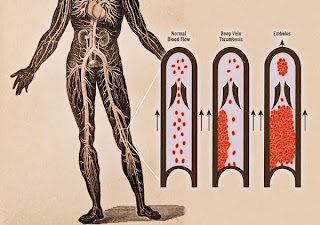
A blood clot is a gel-like mass of blood that forms in a vein or artery. While clots play an important role in stopping bleeding after injury, they can also form when they aren’t needed. These abnormal clots can block blood flow and lead to serious conditions such as deep vein thrombosis (DVT) and pulmonary embolism (PE).
Who can get a blood clot?
Blood clots can affect anyone, regardless of age, ethnicity, race, gender, or activity level. However, certain health conditions, life events, and situations can increase risk. Knowing your personal risk factors can help you recognize symptoms sooner and speak up when something doesn’t feel right.
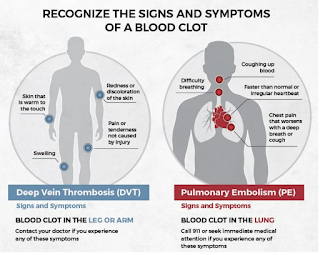
Common signs and symptoms of a DVT include swelling, usually in one leg (or arm); pain or tenderness not caused by injury; reddish or bluish skin discoloration; and/or skin that is warm to the touch. Contact your doctor as soon as possible if you have any of these DVT symptoms.
Common signs and symptoms of a PE include shortness of breath; chest pain that’s sharp; faster than normal or irregular heartbeat; unexplained cough, sometimes with blood; and/or low blood pressure or lightheadedness. Call 9-1-1 immediately if you experience any of these PE symptoms.
To learn more about blood clots -- including how to spot and prevent them -- go to the StoptheClot website. If you have any questions about DVT, you're welcome to contact the Vein Healthcare Center.
Monday, February 9, 2026
Lipedema: Shedding Light on a Misunderstood Disease
treating underlying venous insufficiency is appropriate if it is contributing to lower leg symptoms that impair functioning.
Wednesday, January 21, 2026
3 reasons why winter is a great time for vein treatment
Diagnosing and treating varicose veins (and other forms of venous disease like spider veins and leg ulcers) is a good idea any time of year. Winter, however, is an excellent time for vein treatment.
Here are just a few reasons why:
1. Cozy Compression
With a vein procedure such as ablation, you will be required to wear medical-grade compression stockings any time you are on your feet for the first two weeks following treatment. (After sclerotherapy, you should wear compression 7-14 days when you are on your feet.) The good news is that post-procedure compression stockings will keep you warm while you recover – and it’s much more comfortable with a winter wardrobe.
2. Less Swelling, More ComfortHeat causes blood vessels to expand, or vasodilate, which can increase swelling and discomfort in legs that are prone to varicose veins. The cold weather naturally constricts blood vessels, which can potentially reduce post-procedure swelling and makes recovery feel easier than in the summer heat.
3. Ready for Summer
Recovery from vein treatments take time. Patients can expect some amount of bruising, swelling, and tenderness, although post-procedure discomfort is highly variable from person to person. While some patients may experience discomfort, some may feel none at all. It takes time for legs to recover from vein treatment. If you get started in the winter months, you’ll be more ready for shorts in the summer.
If you’re concerned about your vein health and want to schedule an appointment this winter, feel free to contact us at the Vein Healthcare Center. Our goals are to learn about your condition, help you understand how your vein health affects your overall health, and provide you with treatment options. We make taking the first step simple, comfortable, and stress-free!
Friday, May 30, 2025
Be aware of DVT and travel safely this summer
Summer may be BBQ season, but it’s also the time when people travel long distances in planes, trains, and automobiles. For us in vein healthcare, that means increased risks of Deep Vein Thombosis, or DVT.
The deep vein system carries about 80% of blood from the feet back up to the heart. Deep veins are located under the muscle and connective tissue layers in the legs. A blood clot in a deep vein can be dangerous because the high pressure in the system could cause the clot to break free from the vein wall and enter the blood stream. The DVT could then travel up through the legs into another part of the body such as the lungs, where it would become a pulmonary embolism (PE).DVT or PE symptoms are often misinterpreted as something less serious. A blood clot in the leg may feel like a “charley horse,” shin splints, or a twisted ankle. Symptoms from PE are often attributed to a pulled muscle in the chest, costochondritis (inflammation of the joint between ribs and breast bone), asthma, or a “touch of pneumonia.”
So what are some of the signs to look for? For DVT, the leg may be warm to the touch; swelling in the leg (can also occur in the arm); leg (or arm) pain or tenderness; reddish or bluish skin discoloration.
For PE, be aware of a sudden shortness of breath; sharp, stabbing chest pain (may get worse with deep breath); rapid heart rate or breathing; feeling lightheaded or fainting; unexplained coughing, sometimes with bloody mucus.
In half of DVT and PE cases, no symptoms present at all—but both conditions are medical emergencies. Any of these symptoms should be regarded as a DVT or PE until proven otherwise, especially if someone is in a risk category (including whether there is a history of blood clots in your family).
Awareness is key-- and so is prevention. When traveling long distances, stay well hydrated, stretch legs your legs and pump your feet periodically, avoid or moderate alcohol and caffeine, and consider wearing graduated compression stockings on your trip.
To find out more about DVT and other vein issues, contact us at the Vein Healthcare Center. We will evaluate your vein health — including spider veins, varicose veins, and leg ulcers.
Monday, November 6, 2023
Meet Dr. V!
Dr. Cindy Asbjornsen and the staff are proud to welcome Dr. Satish Vayuvegula to the Vein Healthcare Center team!
Dr. Vayuvegula (pronounced vye-VAY-gla), MD, MS, FAVLS, DABVLM has been a close colleague of Dr. Asbjornsen’s for almost 15 years. He is Board certified in both Phlebology and Emergency Medicine and has 20 years of experience diagnosing and treating venous disease.
Dr. Vayuvegula earned his medical degree from The Chicago Medical School in 1999 and completed his residency at Emory University School of Medicine and Affiliated Hospitals of Atlanta, Georgia.
After residency, Dr. Vayuvegula was invited to train in venous techniques. His interest in vein disease began during his residency when he learned that he had varicose vein disease. He underwent a thermal ablation and immediately experienced a dramatic improvement in his quality of life.
Since becoming certified by the American Venous & Lymphatic Society, Dr. Vayuvegula has performed thousands of thermal ablations and vein procedures. He has been an active member of the American Vein & Lymphatic Society and the American Medical Association since 2005. He became an AVLS Board member in 2018, Secretary in 2020, Treasurer in 2021, and was named President-Elect in 2022 and he most recently was a co-author on two multi-society national guidelines publications on the treatment of venous disorders.
When not helping patients, Dr. Vayuvegula loves spending time with his family and traveling. He also enjoys playing golf, tennis, and pickleball.
Wednesday, February 22, 2023
Meet Robin Dobrinick, Nurse Practitioner
We're excited to introduce the newest member of the care team at the Vein Healthcare Center, Robin Dobrinick, FNP-C.
Robin studied at the University of Southern Maine where she received her Master’s of Science in Nursing. Before joining the team at VHC, she was a Primary Care Provider at a large group family practice in Maine.
Robin meets new patients to review their medical history, perform physical exams, and discuss their concerns and goals particularly as they relate to venous health. She also meets with patients for post-operative visits as well as performing sclerotherapy procedures.
First and foremost, Robin always strives to listen to our patients. She believes that biological, social, and psychological histories are all interconnected and essential to understanding patients so that she and the care team can address patients’ concerns and recommend treatments that align with their goals of care.
Click here to meet the all of our providers!
Thursday, August 18, 2022
Dr. Asbjornsen presents at the 2022 Maine Osteopathic Association conference
Earlier this summer, Dr. Asbjornsen presented a seminar called "Aging & Vein Health" to doctors at the Maine Osteopathic Association's annual conference. There's so much useful information in the presentation, that we wanted to share it more widely!
Here are just a few of the things you'll learn:
- How vein disease presents differently depending on a person's age
- There are different categories of older adults in the general term "seniors"
- Several modern, non-invasive treatments can help decrease the leg pain and discomfort associated with vein disease
- Get to know more about Dr. Asbjornsen and her passion for vein health
Click here to watch the full video, or visit the Vein Healthcare Center YouTube channel.
Wednesday, March 2, 2022
March is Blood Clot Awareness Month
Know your risk
Signs and symptoms
Prevention
Treatment
Monday, July 26, 2021
A lot of living to do - Happy Senior Citizens Day!
Venous insufficiency occurs when healthy veins become damaged and allow the backward flow of blood into the lower extremities. This pooling of blood can lead to a feeling of heaviness, aching, and can cause skin changes, such as spider veins or a brown, woody appearance of the lower legs.
Seniors’ veins respond differently to everyday stress compared to that of a younger person’s because vein walls are primarily made of collagen. As the body ages, a decrease in the production of collagen causes the veins to become more brittle and the valves more likely to fail, especially in the superficial veins. Thus, there is a higher incidence of varicose veins in the elderly population.
Additionally, the skin begins to lose its elasticity and doesn’t respond to stress the way it once did. And because skin is the “end organ” of venous disease, ulcers can occur as a result of damaged veins.
Some seniors might think that “vein stripping” is the only option. While it was the go-to procedure for many years, treatment of venous disease today is vastly different. Breakthroughs in phlebology and new approaches to treatment involve less time and less pain, and they are overwhelmingly successful over the long term when performed by an experienced specialist.
The risk-benefit ratio makes treatment an ideal option for seniors. Although seniors have a 50% greater chance of suffering from vein disease, they have the same success with modern treatment options as anyone else.
Friday, May 28, 2021
June is Men's Health Month
Men don’t get varicose veins, right? Of course they do! Men are just as likely to suffer from vein issues than women.
Schedule your evaluation and learn how treatment could improve your health and quality of life.
Wednesday, April 28, 2021
Year of the Nurse
In 1993, the American Nurses Association (ANA) declared May 6 as the start of National Nurses Week. The annual celebration usually culminates on May 12, Florence Nightingale's birthday.
Last year, the World Health Assembly, the governing body of WHO, designated 2020 as the Year of the Nurse and Midwife -- and the ANA followed WHO’s lead by declaring a U.S. extension of the Year of the Nurse into 2021.
Nurses have always gone above and beyond to serve our communities, but since the pandemic started over a year ago, we've all seen the impact that nurses make every day. That's why ANA chose the theme "Nurses Make a Difference" to recognize the contribution of nurses during the month of May.
At the Vein Healthcare Center, we know how hard nurses work, and we're well aware that venous disease can be a real occupational hazard for nurses who are often on their feet for hours at a time. Here are just a few tips for how nurses can take care of themselves by taking care of their legs and feet. ANA is also providing videos and other resources to help nurses celebrate and participate.
Happy National Nurses Week, Month, and Year to all of the nurses out there. Thank you for everything you do!
Visit the Vein Healthcare Center in South Portland, Maine to learn more about the symptoms of vein disease and how to treat it.
Tuesday, February 2, 2021
The latest issue of Vein Health News!
In our latest issue of Vein Health News, we're helping doctors and their patients clear up some misconceptions about vein disease.
In an easy-to-read Q&A format, Dr. Cindy Asbjornsen answers commonly asked questions about tired legs, blue veins, and more.
We also explain the latest findings about lymphedema, including current treatments.
Click on the link to read Vein Health News!