Showing posts with label vein health. Show all posts

Wednesday, March 2, 2022

March is Blood Clot Awareness Month


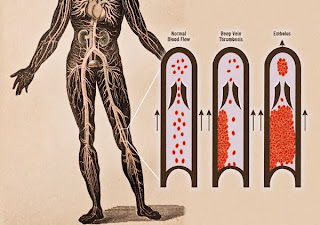
Have you heard of Deep Vein Thrombosis (DVT) or Pulmonary Embolism (PE)? Maybe you're more familiar with the term blood clots

Thousands of lives are lost each year to preventable blood clots, so during Blood Clot Awareness Month -- and throughout the year -- many in the medical community, including Dr. Cindy Asbjornsen, help to spread the word about this common condition. 

Know your risk

The first and most important thing you can do to protect yourself is to learn if you are at risk. 

People being treated for cancer, hospitalized with COVID-19, or getting hip or knee replacements are all at greater risk for developing blood clots. But did you know that even athletes may have increased risk factors too?

Read this risk checklist to learn more.

Signs and symptoms

Common symptoms of a blood clot in the leg or arm (also known as Deep Vein Thrombosis or DVT) include swelling, pain or tenderness (not caused by injury), redness or discoloration of the skin, or skin that is warm to the touch.

Symptoms of a blood clot in the lungs (also known as a Pulmonary Embolism or PE) include difficulty breathing, chest pain that gets worse when you breathe deep or lie down, coughing or coughing up blood, or a heartbeat that's irregular or faster than normal. 
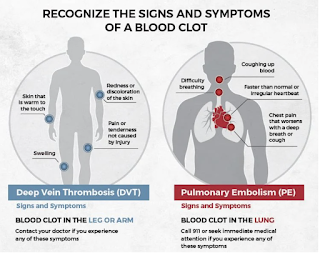

If you experience any signs or symptoms of blood clots, don't ignore them! Let your doctor know, or seek medical attention right away.

Prevention

The good news about blood clots is that they are preventable. Once you consider your risk factors and learn the signs and symptoms, then take a look at your family history. If you learn that there is a history of blood clots in your family, tell your doctor and let other family members know. 

One important way to prevent blood clots is to not be immobile for too long. If you're confined to a bed either in a hospital or at home (especially following hip or knee surgery), talk to your doctor about your options for blood clot prevention. And if you've been sitting for a long time, including in a car or plane seat, get up and move! Stand up, stretch your legs, and try to take a brief walk every couple of hours. Try this simple exercise to keep the blood flowing.


Treatment

If you do develop blood clots, your physician can help you navigate the best treatment choices for your specific situation. Anticoagulants, or so-called "blood thinners," are commonly prescribed. (Note that these medications don't actually "thin" the blood; what they do is slow the body's ability to form new clots and stop existing clots from getting bigger.

Other treatment options can include compression stockings, thrombolytic therapy, and vena cava filters. You can learn more about blood clot treatment here

Monday, July 26, 2021

A lot of living to do - Happy Senior Citizens Day!


August 21 is Senior Citizens Day, a U.S. observance established in honor of older adults who have made positive contributions in their communities. The day is also a time to bring awareness of social and health issues that affect senior citizens – like veins!

Paying attention to venous health is an important aspect of successful aging – and one that has historically gone untreated. Many seniors have been told that heavy, aching legs are a normal part of aging, but that’s often not the case. There are solutions for venous insufficiency that make people feel better, no matter what their age.

Venous insufficiency occurs when healthy veins become damaged and allow the backward flow of blood into the lower extremities. This pooling of blood can lead to a feeling of heaviness, aching, and can cause skin changes, such as spider veins or a brown, woody appearance of the lower legs.

Seniors’ veins respond differently to everyday stress compared to that of a younger person’s because vein walls are primarily made of collagen. As the body ages, a decrease in the production of collagen causes the veins to become more brittle and the valves more likely to fail, especially in the superficial veins. Thus, there is a higher incidence of varicose veins in the elderly population.

Additionally, the skin begins to lose its elasticity and doesn’t respond to stress the way it once did. And because skin is the “end organ” of venous disease, ulcers can occur as a result of damaged veins.

Some seniors might think that “vein stripping” is the only option. While it was the go-to procedure for many years, treatment of venous disease today is vastly different. Breakthroughs in phlebology and new approaches to treatment involve less time and less pain, and they are overwhelmingly successful over the long term when performed by an experienced specialist.

The risk-benefit ratio makes treatment an ideal option for seniors. Although seniors have a 50% greater chance of suffering from vein disease, they have the same success with modern treatment options as anyone else.

Tuesday, June 27, 2017

Are varicose veins a cosmetic issue or a medical issue?

This is a question we get at the Vein Healthcare Center all the time. Most healthcare providers would agree that if a patient is having pain and is unable to perform his or her work due to varicose veins, then it is medically necessary.

But all factors must be weighed when drawing a line between medical and “simply cosmetic,” not the least of which is restoring patients’ confidence and overall well-being. Even if a patient isn’t experiencing physical pain – but won’t swim in a pool or wear shorts to the beach because she’s ashamed of varicose veins – her quality of life is markedly diminished.

Additionally, it is common for venous disorders to be undiagnosed or undertreated. It’s important to remember that varicose veins are a symptom of early stage venous disease, and if left untreated could lead to larger medical issues.

From the perspective of insurance companies the difference between “cosmetic” and “medical” may be whether or not a vein has a connection to the deep system; if it does and the connection is leaking, then they consider treatment medical necessary. That said, there are many vein procedures that are covered by insurance, and one should not assume that treatment won’t be covered. Feel free to contact us at the Vein Healthcare Center to discuss the details of your coverage.

At the Vein Healthcare Center, our basic philosophy is that treating problematic veins isn’t about vanity – it’s about health and quality of life.

If you’re not sure whether or not you have vein disease, click here to find out more, or schedule an appointment for a full evaluation of your vein health.

Tuesday, January 24, 2017

What is tumescent anesthesia?

Before we explain what tumescent anesthesia is, let’s talk about when it would be used in vein care.

Endovenous thermal ablation (using laser or radio frequency) is considered the gold standard in treatment of the great and small saphenous veins, two veins that are often the source of varicose veins in the lower leg.

Endovenous laser ablation (EVLA) uses laser energy to create an intense localized thermal reaction in the incompetent vein. The thermal energy causes vein to seal shut, stopping the healthy blood flow from entering the damaged vein. This keeps the blood flowing toward the heart, not allowing it to change directions and return to the feet. The body will reabsorb the damaged and treated vein, forcing the blood to be diverted to healthy veins in the leg.

EVLA is an outpatient, minimally invasive procedure performed with local anesthetic.

Part of the treatment involves tumescent anesthesia, a technique in which a high volume of a dilute local anesthetic is infiltrated around the vein. Tumescent anesthesia serves three purposes during thermal ablation. First, the fluid causes the vein walls to collapse around the thermal fiber maximizing contact. Second, the fluid creates an insulating ring around the vein and thermal energy source. This protects all surrounding tissues, including nerves and muscles, thus stopping any type of collateral damage. The third function is as an anesthetic, keeping the patient comfortable during the procedure. 

The introduction of tumescent anesthesia into the body should not be painful but can be when administered by some physicians. Thus, before any vein treatment, consult with a board certified phlebologist who can provide a full understanding of all aspects of the procedure.

To learn more about this and other current topics in vein healthcare, click here. And if you’re interested in a free subscription to Vein Health News, just click here.

Tuesday, October 25, 2016

Treatment is individual

Just as every person is unique, so should every health treatment plan be.

If you decide to pursue vein treatment, be clear about what you want. Do you want to wear shorts or skirts again? Do you want your legs to feel good even after standing on your feet all day? Or are you happy to control your venous reflux with compression therapy?

Whatever your desired outcome, make sure you work with a doctor who will listen to you and help you achieve your goals. Of course, we recommend vein care from vein specialist certified by the American Board of Venous and Lymphatic Medicine (ABVLM).

Vein therapies today are performed by a variety of providers; some may lack adequate training or oversight, and some treat cosmetic concerns without taking the overall health and venous health of the patient into account.

Without a full understanding of both vein health and pathology, wrong treatment options can cause more damage to the venous system – and decrease your quality of life. When treated by a certified phlebologist committed to your overall health, you should receive professional medical care you deserve. 

If you’re wondering if you have symptoms of venous disease, click here to learn more about it.

Tuesday, March 8, 2016

Leadership in the field of Phlebology

Dr. Cindy Asbjornsen, founder of the Vein Healthcare Center, is at the forefront of the emergent field of vein health. A nationally recognized phlebologist (vein specialist), Dr. Asbjornsen is the only doctor in Maine to be named a Fellow by the American College of Phlebology (ACP), a distinction held by only 56 other phlebologists in the country.
             
Since 2010, Dr. Asbjornsen has received numerous honors from the ACP, including first place recognition from the ACP’s 24th Annual Conference for her work on symptomatic middle cerebral artery embolism after foam sclerotherapy. In recent years, she has been invited to join the faculty of the ACP’s Annual Conferences as both presenter and judge.
 
In 2014, Dr. Asbjornsen was invited to help mentor the inaugural class of the ACP Leadership Academy, a program that encourages newly practicing and seasoned professionals to further the field of phlebology with a variety of projects. Dr. Asbjornsen worked with Drs. Hansen and Malvehy in their effort to educate the public about vein disease and treatment.

Click here to read more about the ACP Leadership Academy and the first class’ contributions to vein health!

Tuesday, February 9, 2016

Compression Before Laser Treatment


For years, patients suffering from varicose veins and other vein conditions had few options for treatment. Now, endovenous ablation, or EVLA for short, is considered the gold standard in vein treatment. EVLA is minimally invasive procedure that is done on an outpatient basis, and recovery time for most people is very quick.

Graduated compression stockings play an essential role before and after vein treatments, including EVLA. Anyone that undergoes EVLA, sclerotherapy or other treatments for venous insufficiency must wear graduated compression stockings immediately following the procedure and during the recovery period. What some may not realize is that there are reasons to wear compression before treatment too.

Before a vein procedure, wearing compression stockings gives a person a snapshot of what vein health feels like. Since compression alleviates symptoms, it becomes easier for a phlebologist (vein specialist) to tease out, or confirm whether the leg pain is due to muscular-skeletal issues, the nervous system, or venous disease. Another benefit to wearing compression prior to treatment is that it’s good to confirm that the patient can tolerate stockings, and/or that the stockings fit properly. (After the procedure is the worst time to discover that the stockings don’t fit!)

Alternatively, many who think that they could never tolerate compression stockings try on a modern stocking and find them quite bearable. Since compression prevents the progression of vein disease and controls symptoms, some people may even decide to take a more conservative approach, rather than proceed with definitive treatment.

Tuesday, January 26, 2016

Vein disease isn’t always obvious

Vein disease isn’t always obvious. 

The 65-year-old woman in the picture to the right sought treatment because of the bulging veins in her right leg, but at her initial evaluation it became apparent that both legs were affected. Even more surprising, the vein problem was worse on her left leg than her right.

The patient had EVLA treatment on both legs, followed by ultrasound-guided sclerotherapy, and now enjoys healthy-looking legs that no longer ache.

If you have symptoms that you think may be related to venous insufficiency, read our previous blog post “How to tell if you have venous disease,” or click here to learn more. Even if you are experiencing only mild symptoms of venous (vein) disease, as the disease progresses it can lead to chronic venous insufficiency and result in serious medical complications.

Tuesday, January 12, 2016

How to tell if you have venous disease

Have you ever thought that the spider veins behind your knees have gotten bigger as you’ve gotten older? Or have you wondered why your legs feel so tired at the end of the day?

The American College of Phlebology (ACP) now offers a free, online vein self-assessment resource, which includes a questionnaire with eight simple questions to help determine if someone is at risk for vein issues.

Throughout the assessment, you’ll learn facts about vein issues to help you gain a better understanding of your own possible vein condition. Of course, an excellent way to find out if you do or do not have a vein disorder is to be evaluated by a Board-certified vein specialist.

To take the assessment screening, visit www.phlebology.org/VeinAssessment

Tuesday, November 24, 2015

Educational video about veins

We’re going to continue sharing multimedia resources for learning more about veins.

Several years ago, the American College of Phlebology (ACP), in partnership with KAET-TV in Phoenix, AZ, produced a video called "Vein Health: Discoveries, New Technologies & Breakthroughs." The hour-long program leads viewers through the basics of vein disease, and then addresses specific treatment options, misconceptions, and questions from the studio audience with two physician panels.

“Vein Health: Discoveries, New Technologies & Breakthroughs" is hosted by Dr. Helane Fronek, a true pioneer in the field of phlebology. We hope you’ll learn a lot as you watch this video. If you have any additional questions about vein disease or treatment, give us a call or send us an email at the Vein Healthcare Center.


Tuesday, November 10, 2015

Podcasts about vein health


Whether you’re exercising at the gym, cleaning your house, or commuting in your car, podcasts are an easy, efficient way to be informed or entertained. There are two excellent podcasts about vein health and the practice of vein care.

The “Healthy Veins, Healthy Legs” podcast is adapted from an hour-long radio show hosted by Dr. Robert Kistner of the Kistner Vein Clinic and Mike Buck. The show covers all aspects of venous disease, ailments of the legs, and the latest and most effective treatment options. The conversations are lively and were recorded in Hawaii!

VeinCast” is a monthly podcast intended for those involved in the treatment of venous and lymphatic disease. The podcast, sponsored by the American College of Phlebology Foundation, is co-hosted by Dr. Todd Hansen of Carolina Vein Associates and Dr. Albert Malvehy of Miami Beach Vein Institute.

Last year, Drs. Hansen and Malvehy were participants in the inaugural ACP Leadership Academy. The teammates (mentored by Vein Healthcare Center’s very own Dr. Asbjornsen) share a background in Emergency Medicine and were interested in sharing information using the podcast format.

Said Dr. Hansen: “I have been a avid podcast enthusiast for many years, so I had a natural affinity for this project. Access to ‘on demand’ information suits my needs and allows me to make best use of time by listening to informative and freely available information on a wide range of topics.”  

“VeinCast” explores topics related to vein care, practice management, new technologies, and the wide range of issues that physicians face practicing phlebology. In addition to being a convenient resource for anyone interested in the practice of vein care, the podcast provides added value to current members of the American College of Phlebology (ACP). Dr. Hansen also hopes that it will drive membership by attracting new professionals to the ACP: “This podcast is one small way that we can contribute to the future of phlebology.”

Click here to listen to “Healthy Veins, Healthy Legs.”

Click here to listen to “VeinCast.”

Monday, August 31, 2015

Q&A with the newest member of the VHC team

Meet Alison Scheib, PA-C! As a certified Physician Assistant, Ali supports Dr. Cindy Asbjornsen, founder of the Vein Healthcare Center. As a trained sclerotherapist, she performs ultrasound-guided and light-assisted sclerotherapy, a procedure for treating venous insufficiency, particularly smaller “spider veins.”

In addition to spending time with her husband (a fellow PA-C at a veterans hospital) and their two children, Ali loves outdoor activities like swimming and waterskiing. Read on to learn more about Ali.

Q:  What is a Physician Assistant?
A:  A physician assistant, or PA, is a nationally certified and state-licensed medical professional. PAs practice medicine on healthcare teams with physicians and other providers and can prescribe medication. I earned my PA degree from the University of South Alabama and practiced Family Medicine for 15 years in Camden, Maine. 

Q:  How do you help patients at VHC?
A:  I perform ultrasound-guided and light assisted-sclerotherapy on patients, sometimes in follow-up to EVLA treatment. Dr. Asbjornsen and I work together as a team to treat each patient to achieve the best outcome. 

Q: What is your goal for each patient?
A: To make them feel better, both mentally and physically. After treatment, I want them to feel comfortable wearing shorts if that’s important to them. I want them to experience activities that they couldn’t do before because their legs were too sore or tired. I want them to be—and feel—healthier!

Q: Why are you a good fit for VHC?
A: I have the primary care background to see the patient as a whole person, not just the one ailment they’re seeking help for. And like the rest of the staff, I like to spend time with patients to make sure they are comfortable and understand their medical disease and treatment options. 

Q: What do you like the most about vein care?
A: I love being able to focus on one aspect of a patient's healthcare while still treating the "whole" person. I’m also excited that phlebology is still a fairly new specialty, and I’m looking forward to working with Dr. Asbjornsen on doing research that can continue to advance the field.

Tuesday, February 3, 2015

What is ultrasound mapping?

Vein disease, which often manifests as varicose veins, is defined as the impairment of blood flow towards your heart. Oxygenated blood is constantly being pumped from the heart to the rest of our bodies through arteries. It is the job of our veins to carry deoxygenated blood back up to the heart.

Healthy veins have valves that open and close to assist the return of blood to the heart. Vein disease occurs when these valves become damaged, allowing the backward flow of blood in the legs where it can pool, leading to a feeling of heaviness and fatigue and causing varicose veins or other skin changes.

Ultrasound is a tool used to diagnose if and where a vein valve (or multiple valves) in the legs is damaged. High-frequency sound waves are used to create images that allow the doctor to see which veins have flow going in which direction—like a road map for the venous system.

A healthy vein will only allow flow from the feet towards the heart. Faulty veins are often connected, so finding the “source” of the problem is a complicated, but critical, step in establishing where exactly treatment should start.

Ultrasound is the gold standard for evaluation of chronic venous disease, and it is important to have a qualified sonographer perform the mapping in order to have accurate diagnostic results. To learn more about what to expect at a vein evaluation, visit our previous post on the topic.

Tuesday, August 19, 2014

The foot pump


Is “the foot pump” a new dance all the kids are doing? No, it has something to do with veins, of course! Namely, making sure the circulation in your legs is working properly.

As summer draws to a close, many people are returning from vacation, driving in their cars, or hopping a long flight home. In order to prevent deep vein thrombosis (known as DVT), try the foot pump, in the car or on the plane.

It’s a simple toe-tap exercise: tap your feet for a minute or two, going back and forth between heels and toes. This squeezes the deep veins in the legs and forces the blood to circulate through the leg. It also feels good after sitting for a long period of time. Do the foot pump (on each foot) every half-hour or so.

Also, don’t forget to stay hydrated, preferably with water. And try to take a brief walk in the airplane aisles (or at the rest stop) occasionally to keep the blood flowing.  


Tuesday, August 5, 2014

Meet Dr. Cindy Asbjornsen


As the Vein Healthcare Center approaches another anniversary of serving patients in Maine and New England, we thought we’d revisit this interview with VHC founder Dr. Cindy Asbjornsen:

Q: What were your most important needs in getting started?
A: I think my most important need was building a team of business advisers. Although I had a strong grasp of the medical side of the practice, the business side remained a bit of a mystery. While I have a general understanding of the business, there’s no reason for me to have expertise in everything, not when there are people on my team who do that. Assembling a strong team, including bookkeepers and legal and financial experts, was critical in getting my practice off the ground, and they remain very important in running the practice, so I can focus on caring for patients.

Since this interview was published, Dr. Asbjornsen has been named a Fellow by the American College of Phlebology, contributed to two respected books about phlebology, and moved back to Peaks Island!

To read more of the Maine Women article, click here. To learn more about Dr. Asbjornsen, click here.

Tuesday, July 22, 2014

What women can do about varicose veins (and free eArticle)


It is a common misconception that only women experience troublesome veins. In the U.S. one in three people— including men— has some form of venous disease. Still, gender does make a difference. Why?

A woman has three potential “high risk” times in her life that men do not. Significant hormonal fluctuations typically happen during menarche (menstruation), pregnancy, and menopause. Surges in the hormone progesterone, in particular, can cause veins to stretch, sometimes enough for vein valves to tear and fail to do their job. Women who have venous insufficiency may notice that their symptoms worsen during menstruation.

Even after menopause, when most hormone fluctuations have stopped, a woman’s risk of vein disease continues to increase with age. There is a higher incidence of varicose veins in older women, because as the body ages, it produces less collagen, which causes the veins (and vein valves) to become weaker.

With the right information, women have the ability to reduce their risk of developing venous disease and/or decrease its severity. Preventative measures include: wearing graduated compression stockings; living an active lifestyle; and maintaining a healthy weight.

There are also a number of effective, minimally invasive treatments available for varicose veins and other symptoms of vein disease. If you’d like to learn more about how women can improve their vein health, read our latest eArticle “Women and Vein Treatments.” Click here to download your free copy.

Monday, July 7, 2014

Welcome back, snowbirds!


For years, New Englanders have spent the winter months in warmer climates and then travel north when the snow stops flying. Summer can be a good time for people with vein problems — including “snowbirds”— to think about treatment.

During the warmer summer months, the heat can dilate veins and cause symptoms to worsen— which can inspire people to seek treatment. All venous procedures require compression stockings post-treatment, and because many seniors already wear compression stockings regularly, this may be less of a barrier.

Most snowbirds check in with their primary care doctor when they get to Maine or before they leave. If this is something you do, this doctor visit is a good time to discuss any achiness or pain in your legs, or ask about vein disease, such as varicose veins or venous ulcers.

In any case, vein evaluations can take place in either the patient’s summer or winter home. Phlebologists who are certified by the American Board of Phlebology (ABPh) can be found on the ABPh web page: www.americanboardofphlebology.org.

Finally, good communication between primary care physicans and specialists is essential to receiving good patient care. Phlebologists, too, should keep every patient’s family doctor abreast of all vein procedures and interventions, even if one doctor is in Florida and the other is in Maine. 

Monday, May 19, 2014

After EVLA


As with any medical procedure, if you’ve undergone Endovenous Laser Ablation Therapy, or EVLA, it is important to know what to expect after the procedure— and to understand any recommendations or restrictions the doctor gives you.

Because EVLA is minimally invasive and almost always performed in an outpatient setting, there is usually minimal down time, if any. In most cases, those who undergo EVLA treatment can return to their regular daily activities immediately. In fact, many patients may return to work the day after your appointment, provided the job is not physically strenuous.

Recommendations
Immediately after the EVLA is performed, your leg will be washed and you will be asked to put on your compression stockings. Compression stockings should be worn for the first two weeks following treatment any time you are on your feet. (They do not need to be worn during sleep.) This is an important requirement and can make a big difference in your recovery.

Following EVLA, the treated leg may drain fluid for the first 24 hours, making the compression stocking feel damp. Patients can expect a moderate amount of bruising, swelling, and discomfort. Post-procedure discomfort is highly variable from patient to patient, and while some patients may experience pain, some may feel no discomfort at all following the procedure. Elevating your legs as much as possible, applying heat, and taking ibuprofen as needed are all effective ways to ease most post-operative pain.

Another important recommendation is to walk for 30 minutes each day for the first two weeks after your procedure. Walking can be done in short increments throughout the day adding up to 30 minutes, or it can be done all at once, whatever works best for your schedule.

Restrictions 
Post-procedure restrictions include no heavy lifting and no strenuous physical activity while standing. However, patients should feel free to exercise as long as their feet remain at, or above, the level of their heart (e.g. swimming or floor exercises, ideally with feet on an exercise ball).

The main reason for these restrictions is that those activities increase pressure by tightening the core or abdominal muscles— which then increases pressure downward into the legs. That pressure can cause irritation of the treated vein, which may lead to swelling. It's possile that the swelling could develop into phleblitis. The closed vein likely won’t open, but phlebitis can be quite uncomfortable.

Hot tubs are also restricted while you are healing. Even though doctors sometimes suggest patients use heating pads post-procedure, in a hot tub all of the veins in the legs above and below the treated area become dilated. This can actually cause pain.
           
Follow up
Finally, and most importantly: schedule a follow-up visit to the phlebologist within a week following the procedure to ensure that everything is healing properly.